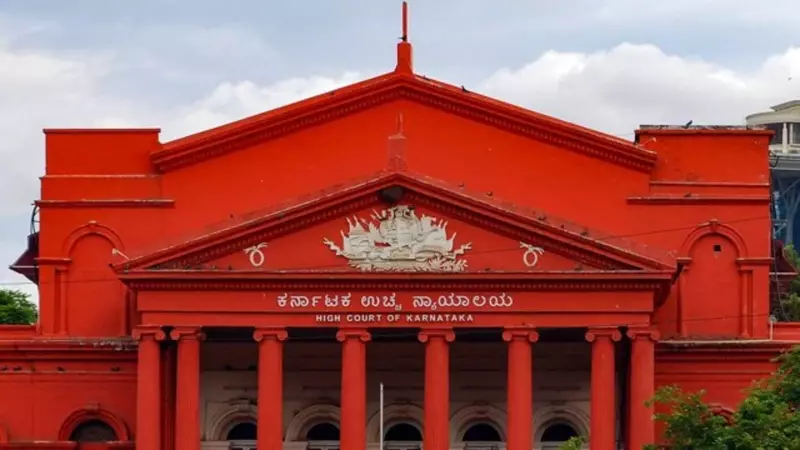
In a significant legal development, the Karnataka High Court has dealt a blow to the state government by imposing restrictions on new hiring under a contentious law that increased reservation quotas for Scheduled Castes (SCs) and Scheduled Tribes (STs). The court's interim order, however, provides a crucial carve-out for recruitment processes that were already underway before a specific cut-off date.
Court's Interim Order and Key Exceptions
A division bench comprising Chief Justice Vibhu Bakhru and Justice C M Poonacha passed this interim order on November 27, 2025. The bench was hearing two Public Interest Litigations (PILs) challenging the constitutional validity of the Karnataka Scheduled Castes and Scheduled Tribes (Reservation of Seats in Education Institutions and Appointments of Posts and Services under the State) Act, 2022.
The court explicitly barred the state from issuing any fresh recruitment notifications under this Act until further orders. However, it made a critical exception. The government is permitted to continue with recruitment processes for which notifications were already issued before November 19, 2025. These ongoing processes can proceed even if they follow the enhanced reservation percentages mandated by the 2022 law.
Provisional Appointments and Legal Challenges
The High Court attached a major condition to this permission. It clarified that all appointments made through these ongoing recruitments will be subject to the final outcome of the petitions challenging the law. To enforce this, the bench directed that every appointment or promotion order issued under the Act must carry a clear statement. This statement must declare that the appointment is provisional and contingent upon the court's final judgment.
This measure is designed to prevent selected candidates from later claiming equitable rights if the court ultimately strikes down the enhanced quotas. The court further stated that its interim permission would not affect any specific orders already passed by other courts or tribunals in related matters.
The Core of the Legal Dispute
The petitions, filed by Mahendra Kumar Mitra of Raichur and Mahesh of Bengaluru, challenge the very foundation of the 2022 Act. The law significantly hikes reservation percentages for SCs and STs in state education and jobs. It increased the quota for Scheduled Castes from 15% to 17% and for Scheduled Tribes from 3% to 7%.
With the reservation for Other Backward Classes (OBCs) remaining at 32%, the total reservation in Karnataka now stands at 56%. The petitioners argue that this breaches the 50% ceiling limit established by the Supreme Court in the landmark Indra Sawhney case. They also contend that the state government failed to follow the mandatory consultation process with the National Commissions for SCs and STs as required under Articles 338(9) and 338A(9) of the Constitution.
The state government, defending the law, had argued before the court that halting all ongoing recruitment would severely disrupt administrative functioning due to existing manpower shortages.