Kayaköy: The Eerie Ghost Town of Turkey's Muğla Province
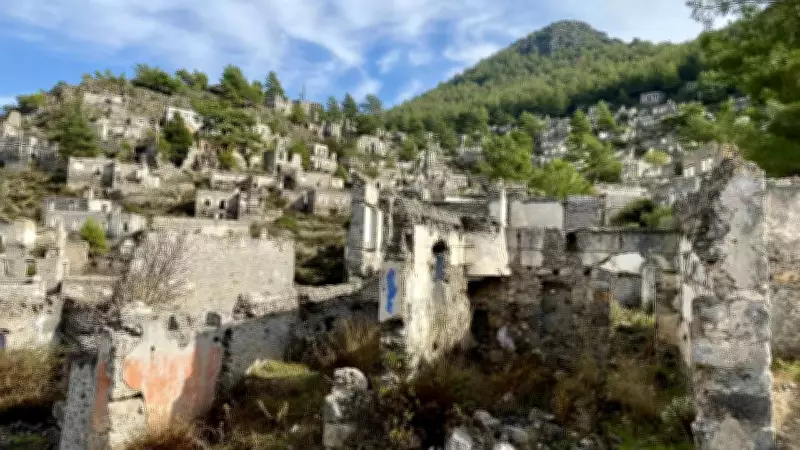
Nestled in the southwestern region of Turkey's Muğla province lies Kayaköy, a hauntingly beautiful abandoned settlement that has earned the somber designation of a ghost town. This desolate village, with its hundreds of roofless stone houses and two imposing churches, serves as a powerful open-air museum, officially recognized by Turkey's National Immigration Agency (NIA). The site stands as a permanent memorial to the tragic 1923 population exchange between Greece and Turkey that forever altered its destiny.
The Historical Tragedy Behind the Abandonment
Kayaköy's transformation from a thriving multicultural community to an empty shell was not the result of natural disaster, but rather a direct consequence of political decisions following the Greco-Turkish War. The vibrant town of Levissi, as it was originally known, was home to approximately 10,000 Greek Orthodox inhabitants who had built a prosperous life in the region. Following the Treaty of Lausanne in 1923, these residents were forcibly expelled from their homes and required to relocate to Greece as part of a massive population exchange based on religious affiliation.
The departure was sudden and complete – almost overnight, the entire community vanished, leaving behind their homes, churches, and livelihoods. The Muslim families who were supposed to replace them from Greece found the rocky hillside terrain unsuitable for agriculture and settlement, choosing instead to establish themselves in more hospitable areas. This dual displacement created the perfect conditions for Kayaköy's transformation into the ghost town we see today, with its architectural remains slowly deteriorating over the decades.

From Ruins to International Recognition
For more than a century, Kayaköy's abandoned structures have stood as silent witnesses to forced migration and political upheaval. The 1957 earthquake further damaged the already vulnerable buildings, accelerating their decay. However, in recent years, this site of human tragedy has undergone a remarkable transformation in perception and purpose.
Kayaköy has now achieved international recognition as a UNESCO World Heritage site, specifically designated as a World Friendship and Peace Village. This prestigious status acknowledges the village's powerful testimony to the human cost of shifting national borders and political conflicts. The National Immigration Agency's classification of Kayaköy as an open-air museum has helped preserve what remains of this historical settlement while educating visitors about its poignant story.
A Living Memorial to Displacement and Resilience
The hundreds of stone houses without roofs, the two large churches standing empty, and the network of abandoned streets now serve as an outdoor classroom about forced migration. Tourists from around the world visit Kayaköy not just to see an archaeological site, but to understand the personal stories behind political decisions that displaced thousands of people.
As a UNESCO World Peace and Friendship Village, Kayaköy has evolved from being merely a collection of ruins to becoming a symbol of reconciliation and historical memory. The site stands as a valuable written record in stone – a permanent reminder of the 10,000 individuals who once called Levissi home, and a testament to the resilience of human communities in the face of geopolitical changes that too often prioritize borders over people.