Kerala High Court Hears Petition on CMO Bulk Messaging to Government Employees
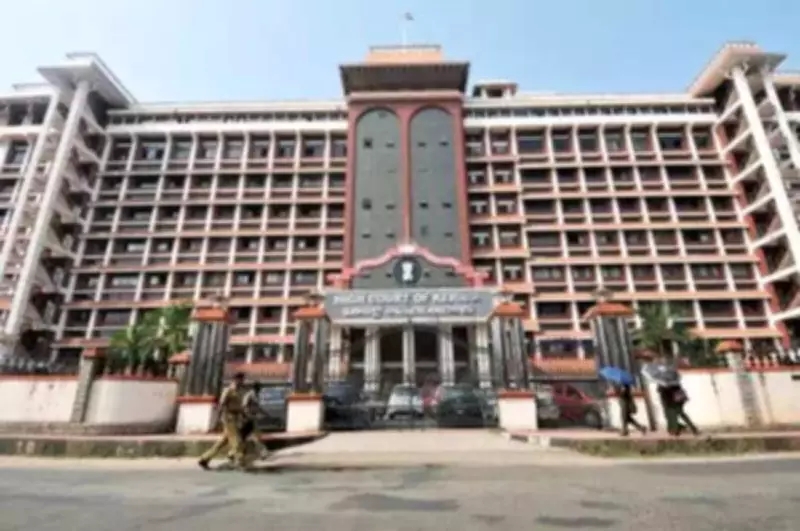
The Kerala government on Friday assured the High Court that its earlier undertaking to refrain from disseminating bulk messages from the Chief Minister's Office (CMO) would continue until next Monday. This assurance came during a hearing on a petition challenging the CMO's bulk messaging campaign to government employees ahead of assembly elections.
Government's Assurance and Court Proceedings
Advocate General K. Gopalakrishna Kurup, appearing on behalf of the state government, made this commitment to the High Court. The bench of Justice Bechu Kurian Thomas recorded the submission and adjourned the petition to March 2. The petition was filed by P. Rasheed Ahamed, an associate professor at KTM College in Malappuram, and K. M. Anil Kumar, an employee of the Department of General Administration in Thiruvananthapuram.
Allegations of Data Privacy Breach
The petitioners primarily alleged that the state government sent messages highlighting the achievements of the LDF government to government employees and judges using private data, including mobile numbers. They claim this data was accessed from information furnished by employees for crediting their monthly salaries in the Service and Payroll Administrative Repository for Kerala (SPARK) software, without their consent. According to the petitioners, this constitutes data leakage and intrusion into the privacy of citizens.

On Friday, the petitioners filed an interlocutory application (IA) placing additional documents on record. These included communications allegedly sent by Seeram Sambasiva Rao, Officer on Special Duty at the CMO, to the Local Self Government Department (LSGD). The communications sought the latest data on registered users of the K-SMART application and beneficiaries of the 'Sthree Suraksha Padhathi'. The petitioners also sought a direction to the government to make available communications issued to all departments in a similar manner, to ascertain the extent of any alleged data leakage.
Furthermore, the petitioners alleged that a meeting was convened with a private party in Mumbai for entrusting the data, raising concerns about potential external handling of sensitive information.
Government's Counter-Affidavit
Meanwhile, the state government filed a counter-affidavit in response to the allegations. It stated that no data has been transferred to any entity outside the government and that the processing and handling of data occurred strictly within the government framework. This was done through the Kerala State IT Mission (KSITM), the designated nodal agency for all e-governance-related activities.
The affidavit asserted that there has been no data breach, no illegal transfer of data, and no unauthorized disclosure. It also claimed that the messages from the Chief Minister addressed to government employees regarding the grant of arrears of dearness allowance (DA) and other benefits cannot be termed political in nature but form part of governance. The affidavit noted that assembly elections have not been declared, nor has the model code of conduct come into force. In such circumstances, linking the government's executive action with the elections is unsustainable in law and on facts.
The case highlights ongoing tensions between government communication practices and data privacy rights, with the High Court set to further examine the matter in early March.