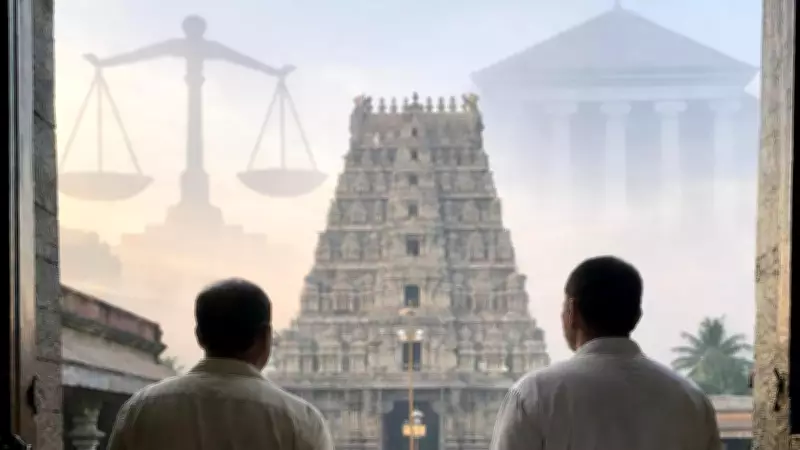
Kerala High Court Issues Stern Warning on Temple Entry and Religious Harmony
In a landmark ruling that addresses growing tensions across India, the Kerala High Court has emphatically warned against using legal frameworks to sow religious discord. The court declared that laws must function as a unifying force that promotes social cohesion and mutual respect, rather than becoming instruments for fomenting disharmony between different religions, castes, or communities.
Background of the Case and Broader Implications
The court's statement came in response to a specific legal challenge arising from a religious event at the Sree Parthasarathy Temple in Adoor, Pathanamthitta district. During a Sreekrishna Jayanthi programme, the presence of two Christian priests became the subject of intense legal scrutiny and public debate.
This case has acquired significant national resonance because it touches upon a critical question now emerging in multiple states across India: when temples are statutorily managed and publicly promoted as part of pilgrimage and tourism circuits, can faith-based exclusions be enforced in the same manner as in privately governed religious institutions?
The Court's January 30 Order and Legal Principles
In its order delivered on January 30, 2026, the Kerala High Court examined the delicate balance between religious customs and constitutional values. The court emphasized that as disputes over who may enter religious spaces continue to surface across various states, courts are increasingly being called upon to adjudicate these complex matters.
The judgment noted that temples and shrines administered or regulated by the state occupy a unique position in Indian society. When religious institutions receive public funding, state management, or promotion through official tourism and pilgrimage circuits, they must operate within constitutional frameworks that prioritize social harmony and equal treatment.
Growing National Debate on Religious Spaces
The Kerala High Court's ruling comes at a time when similar disputes are emerging in multiple states, creating a nationwide conversation about the intersection of religious freedom, state regulation, and social harmony. Legal experts suggest this judgment may establish important precedents for how courts approach cases involving state-managed religious institutions.
The court's warning against using temple entry as a means to create religious division reflects broader concerns about maintaining India's pluralistic social fabric while respecting religious traditions and constitutional principles.
Key Takeaways from the Judgment
- The law must function as a unifying framework that advances social cohesion
- Legal instruments should not be used to create discord between religions or communities
- State-managed temples occupy a unique position requiring careful balancing of religious customs and constitutional values
- The question of faith-based exclusions in publicly promoted religious institutions requires nuanced legal consideration
This significant ruling from the Kerala High Court establishes important principles for how India's legal system should approach increasingly common disputes about access to religious spaces, particularly those that receive state support or management.