Thanya Nathan Makes History as Kerala's First Visually Impaired Judge
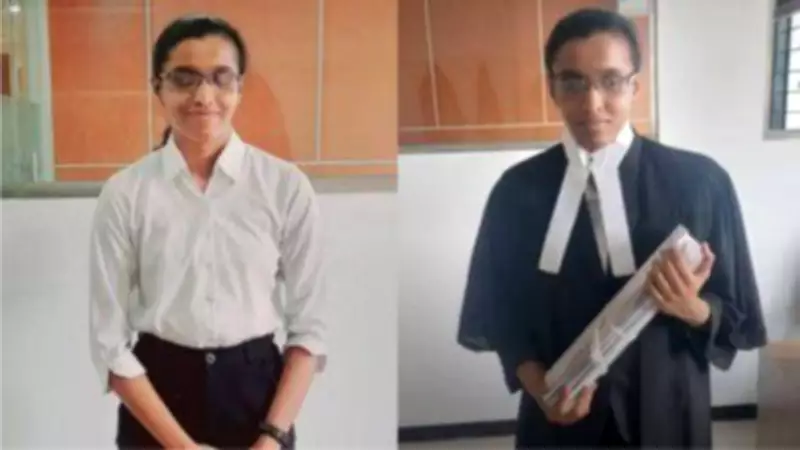
In a landmark achievement for inclusivity in India's judiciary, 24-year-old Thanya Nathan has topped the Civil Judge (Junior Division) examination under the persons with disabilities category. Hailing from Mangad in Kannur district, Nathan is now poised to become Kerala's first judge with a visual disability, marking a significant milestone following a pivotal Supreme Court ruling.
Inspired by Supreme Court Judgment
Nathan's journey was catalyzed by a 2025 Supreme Court judgment delivered by Justices J B Pardiwala and R Mahadevan, which allowed persons with disabilities to enter judicial service. "That judgment inspired me to apply when the notification for the examination was issued," she revealed, speaking as she awaits her official appointment letter from the state government.
Blind since birth, Nathan began her education at a special school in Dharmadom. She completed her schooling at Parassinikadavu High School up to Class 10 and pursued higher secondary education at Morazha Government Higher Secondary School. It was during her plus two studies that she resolved to pursue law.

Academic Excellence and Professional Preparation
With unwavering family support, Nathan cleared the law entrance examination and topped the LLB course at Kannur University, where she was the sole student with a visual disability. "The staff were not used to teaching students with disabilities, but they made an effort to understand my needs and support me, which helped me overcome the gap," she recounted.
After enrolling as an advocate, she practiced under lawyer K G Sunilkumar in Thaliparamba, Kannur. Describing her as sharp and methodical, Sunilkumar noted, "After the shift from the IPC to the Bharatiya Nyaya Sanhita, even experienced lawyers get confused. But if you ask Thanya, she can recall sections instantly. She handles e-documents with ease and has appeared in court several times."
Overcoming Challenges with Technology and Determination
Nathan prepared for the judicial service examination independently, making notes using Braille scripts. For the interview, she sought guidance from a lawyer in Thiruvananthapuram. "The interview panel asked how I planned to work with my disability. I explained my approach, and I believe my answers convinced them," she said.
She acknowledges the challenges ahead but remains optimistic, citing technological advancements. "I know it will be a challenging career. But technology has advanced to a stage where most judicial work can be handled using assistive tools such as screen readers and dictation software," Nathan explained.
Future Challenges and Hopes for Accessibility
Looking forward, Nathan identifies infrastructure accessibility as a primary concern. "Our systems are not fully accessible yet. I hope the government will take appropriate steps so that I can work comfortably," she emphasized.
The Kerala High Court has forwarded the selection list to the state government, which is expected to issue the appointment order shortly. Nathan's achievement not only highlights her personal perseverance but also sets a precedent for greater diversity and inclusion within India's legal framework, encouraging others with disabilities to pursue careers in judiciary.