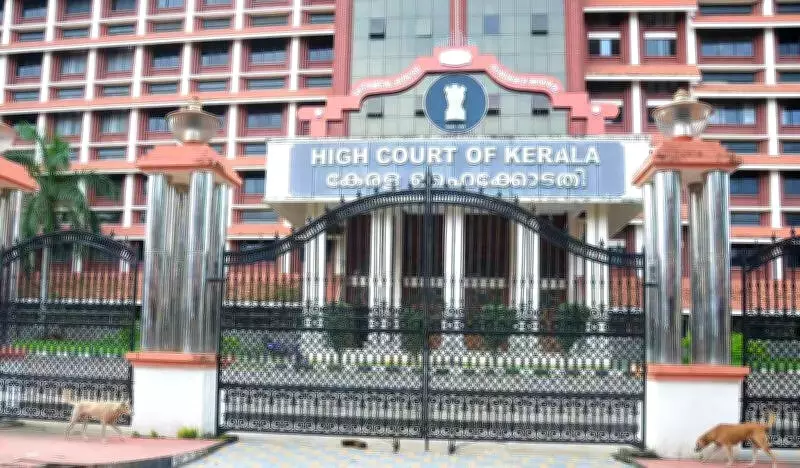
Lakshadweep's 'No Vehicle Wednesday' Order Faces Legal Challenge in High Court
A significant legal challenge has been mounted against the Lakshadweep administration's recent directive declaring Wednesdays as 'no vehicle day' across the Union Territory. A petition has been formally filed in the Kerala High Court, contesting the order that prohibits motor vehicles from plying on all islands every Wednesday.
Court Proceedings and Petition Details
Justice Bechu Kurian Thomas presided over the initial hearing on Friday, where the plea submitted by C P Ajmal Khan, a lawyer from Kalpeni Island who practices in both Lakshadweep and Ernakulam, was presented. The court has adjourned the matter to February 23, 2024, to allow for the rectification of technical defects in the petition that were identified by the high court registry.
According to the petitioner, the controversial order was issued by the district collector on February 17, 2024, and is scheduled to take effect from February 25, 2024. The directive imposes a complete ban on motor vehicles every Wednesday, with only specific exceptions permitted.
Exemptions and Penal Provisions
The administration's order provides limited exemptions for certain categories of vehicles. These include:
- Vehicles used by persons with disabilities
- Vehicles deployed for security purposes
- Vehicles engaged in emergency medical services
For all other motor vehicles, the ban remains absolute. Violations of this directive would attract a substantial fine of Rs 500 per incident, creating a significant financial deterrent for non-compliance.
Administration's Rationale and Petitioner's Counterarguments
The Lakshadweep administration has publicly stated that the measure aims to achieve multiple public welfare objectives. According to official statements, the 'no vehicle day' initiative seeks to:
- Promote public health by encouraging walking and cycling among residents
- Reduce vehicular emissions across the environmentally sensitive islands
- Create cleaner, quieter public spaces on a weekly basis
However, the petitioner presents a fundamentally different perspective on the matter. C P Ajmal Khan contends that the state cannot legally compel citizens to adopt specific modes of transportation, such as walking or cycling, even under the guise of promoting public health. The petition argues that such coercive interference represents an unjustified intrusion into the personal liberty and freedom of movement guaranteed to all citizens.
The legal challenge specifically alleges violations of multiple fundamental rights protected under the Indian Constitution:
- Article 14: Right to equality before the law
- Article 19(1)(d): Right to move freely throughout the territory of India
- Article 19(1)(g): Right to practice any profession, or to carry on any occupation, trade or business
- Article 21: Right to life and personal liberty
Political Opposition and Public Representation
Meanwhile, political opposition to the measure has emerged from Lakshadweep's elected representative. Member of Parliament M Hamdullah Sayeed has publicly criticized the administration's decision through a video message, asserting that the order operates against the interests of the island's residents.
Sayeed characterized the decision to impose fines on vehicle users as "undemocratic, unnecessary and illegal" in his public statement. The MP has taken formal action by submitting a detailed representation to the Lakshadweep collector, outlining his objections and concerns regarding the implementation of the vehicular ban.
The legal and political challenges highlight the complex balance between environmental initiatives and individual rights, setting the stage for a significant judicial examination of administrative authority versus constitutional protections in India's Union Territories.