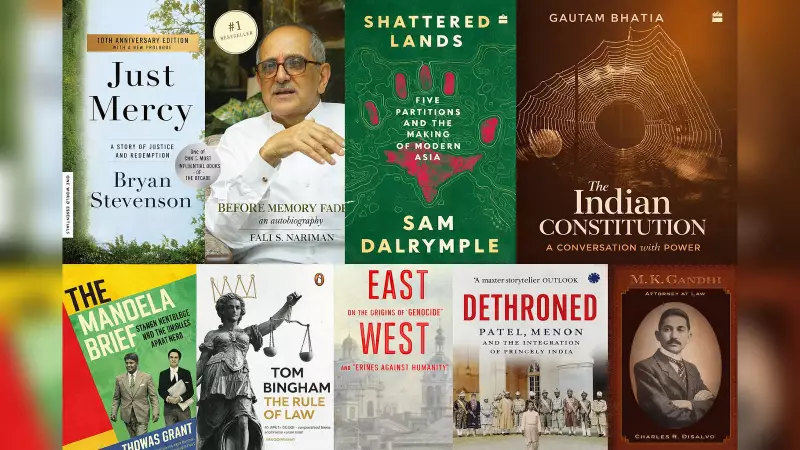
In a unique initiative aimed at shaping the minds of future generations, some of India's most distinguished legal luminaries have come together to recommend a curated reading list for the year 2026. This list, intended not just for law students and young lawyers but for every conscientious citizen, moves far beyond standard legal textbooks to include works on constitutionalism, history, philosophy, and ethics.
Beyond the Courtroom: A Reading List for Intellectual Grounding
The recommendations come from retired judges and senior advocates with decades of experience in India's courtrooms. They emphasize that to build a well-rounded, ethical, and intellectually grounded legal profession—and an informed citizenry—one must read widely. The selections are designed to foster legal thinking, sharpen ethical judgment, and build personal resilience.
Expert Recommendations: From Constitutional Debates to Historical Partitions
Justice S. Muralidhar, former Chief Justice of the Orissa High Court, suggests a trio of impactful books. He recommends Fali S. Nariman's autobiography, Before Memory Fades, for its insights into the legal profession. For a fresh perspective on India's foundational document, he points to Gautam Bhatia's The Indian Constitution: Conversations with Power. He also highlights the enduring relevance of Upendra Baxi's critical work, The Crisis of the Indian Legal System.

Senior Advocate Madhavi Divan, a former Additional Solicitor General, strongly advocates reading outside strict legal texts. Her list includes B.R. Ambedkar's seminal Annihilation of Caste and John Zubrzycki's Dethroned: Patel, Menon and The Integration of Princely India. She also recommends Sam Dalrymple's Shattered Lands: Five Partitions and the Making of Modern Asia to gain a broader perspective often missing from Indian education.
Advocate Vrinda Grover, a noted human rights lawyer, selects books that reveal the transformative power of lawyering. Her picks include Philippe Sands' East West Street: On the Origins of Genocide and Crimes Against Humanity, Charles R. DiSalvo's M K Gandhi, Attorney at Law: The Man Before the Mahatma, and Thomas Grant's The Mandela Brief: Sydney Kentridge and the Trials of Apartheid.
Foundational Texts and Philosophical Guides
Senior Advocate Vikas Singh underscores the importance of mastering core legal principles. He calls H.M. Seervai's Constitutional Law of India the "most important document" for any student, as it delves into the intent behind constitutional articles. He also stresses the everyday relevance of M.P. Jain's Administrative Law, which provides tools to challenge governmental illegality.
Senior Advocate Sajan Poovayya recommends Lord Tom Bingham's The Rule of Law for laying the moral foundation of the profession. For guidance on the human aspects of legal practice, he suggests Adam Grant's Letters to a Young Lawyer, which tackles ethics, judgment, and professional identity.
Senior Advocate Siddhartha Dave believes philosophy is essential for a lawyer's inner compass. He recommends Bertrand Russell's A History of Western Philosophy alongside The Bhagavad Gita. He argues that these texts provide both answers and solace for the innumerable ethical conflicts a lawyer faces.
The Core Message: Law is About Conscience and Context
The collective wisdom of these experts sends a powerful message: the law is not merely a collection of statutes and precedents. It is deeply intertwined with conscience, historical context, and courage. For young lawyers and engaged citizens alike, engaging with this diverse reading list promises more than professional competence. It offers the ethical depth, historical awareness, and wisdom required to navigate an increasingly complex world. This 2026 reading list serves as a vital roadmap for intellectual and moral growth.