

London Landlords Face Legal Scrutiny Over Discriminatory Rental Advertisements
Private landlords across London have been found to be illegally advertising rental properties with explicit preferences for "Muslim only" and "Hindu only" tenants, according to a recent investigation by the Daily Telegraph. These listings, which appear on popular platforms such as Facebook, Gumtree, and Telegram, openly specify religious and ethnic criteria, raising serious concerns about compliance with UK equality legislation.
Widespread Discriminatory Listings on Social Media Platforms
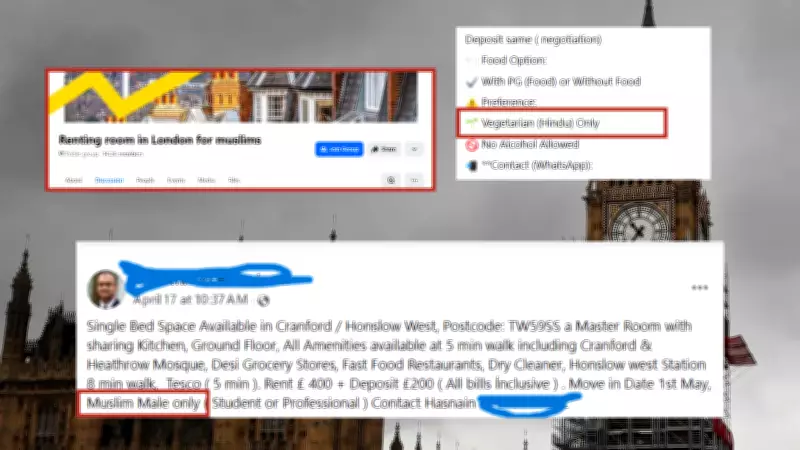
The investigation uncovered numerous advertisements featuring phrases like "Muslims only," "for 2 Muslim boys or 2 Muslim girls," and "Muslims preferred." Other listings targeted specific ethnic or regional groups, with ads stating "suitable for Punjabi boy," appealing to Gujarati speakers, or mentioning preferences for individuals from Kerala and Haryana. Some advertisements went as far as to specify "Hindus only," blatantly excluding other religious groups.
These practices potentially breach the Equality Act 2010 in the United Kingdom, which strictly prohibits discrimination based on religion, sex, race, and other protected characteristics. The Equality and Human Rights Commission explicitly lists "advertising a room for Asian tenants only" as an example of an unlawful advertisement, highlighting the legal risks involved.

Platforms and Groups Facilitating Illegal Ads
On Facebook, discriminatory ads are prevalent on pages such as "Renting room in London for Muslims" and "Muslim rents." The Daily Telegraph's investigation identified dozens of similar listings on Telegram, where landlords request tenants of specific genders, religions, and nationalities—all of which are potentially illegal under current laws.
In a separate check, TOI found multiple such advertisements in a Facebook group titled "Flat to rent in London," which boasts over 325,000 members. Examples included ads for rooms specifying "Muslim Pakistani Girl Only," "Looking for respectful Muslim boys only," as well as "vegetarian Hindu only" and "Hindu preferred."
Landlord Responses and Legal Exceptions
When a Telegraph reporter inquired about a "Muslims only" room listed for £850 per month in Barking, asking if it was available to individuals of other faiths, the landlord responded with a blunt "Go away." This interaction underscores the discriminatory intent behind some of these advertisements.
It is important to note that there is a limited legal exception for landlords who live in the property and share essential facilities with a lodger. In such cases, they may advertise a preference for a specific religion or gender if worded carefully, but this does not extend to race-based discrimination. However, this exception is narrow and does not apply to most rental scenarios.
Industry and Government Condemnation
A spokesperson from the National Residential Landlords Association strongly condemned these practices, stating: "Advertising a property to let only to adherents of a particular religion or philosophical beliefs is a clear example of direct discrimination, and as such prohibited by the Equalities Act 2010. There is no place for this kind of exclusionary practice in the UK’s private rented sector. No landlord or letting agent should attempt to bar any prospective tenant on the basis of religion, race, nationality, or ethnicity. It is illegal and can lead to severe legal and financial consequences."
Echoing this sentiment, a UK government spokesperson emphasized: "Discrimination against anyone based on their religion or race is illegal, including in the rental sector. Any landlord not complying with the law should face the consequences."
The investigation highlights a troubling trend in London's housing market, where discriminatory advertising persists despite clear legal prohibitions. As authorities and industry bodies call for stricter enforcement, the findings serve as a stark reminder of the ongoing challenges in ensuring equal access to housing for all residents, regardless of their religious or ethnic background.






