

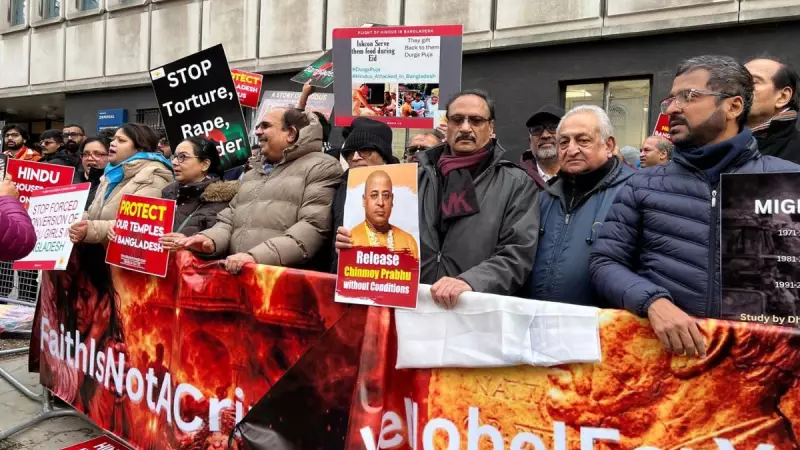
A powerful demonstration erupted in the heart of London on December 28, 2025, as members of the Indian and Bangladeshi diaspora, alongside human rights activists, gathered to protest against the recent killings of Hindus in Bangladesh. The protest, held outside the Bangladesh High Commission, saw participants holding placards and chanting slogans, accusing authorities of failing to protect the minority community.
Voices from the Protest: Accusations of Inaction and Silencing
The protest was a direct response to a series of violent incidents targeting the Hindu community in Bangladesh. Demonstrators carried signs with messages like 'Terrorised and Silenced' and 'Stop Killing Hindus in Bangladesh', visually capturing their core grievance. A key allegation from the protestors was that the victims and their families are being systematically intimidated into silence, preventing them from seeking justice or even speaking about the attacks.
Speakers at the event condemned what they described as a pattern of targeted violence and a culture of impunity for the perpetrators. They called upon the Bangladeshi government to take immediate and concrete steps to ensure the safety and security of all its citizens, irrespective of their religious beliefs. The protest also served as an appeal to the international community, including the UK government, to apply diplomatic pressure on Dhaka to address these human rights concerns.

The Context: Rising Tensions and Minority Safety
The London protest highlights growing international concern over the safety of religious minorities in Bangladesh. While the specific incidents that triggered the December 28th demonstration were not detailed in the source report, the rally points to a broader atmosphere of fear and insecurity reported within the Hindu community. Incidents ranging from land grabs and vandalism of temples to physical assaults and killings have been reported by various rights groups over recent years, often linked to communal tensions or extremist elements.
The choice of location—outside the diplomatic mission of Bangladesh in a global city like London—was strategic. It aimed to amplify the issue on an international stage, moving beyond local discourse to garner global media attention and diplomatic scrutiny. The protestors sought to break the perceived 'silence' surrounding these events by creating a visible and vocal platform far from the sites of the original violence.
Reactions and the Path Forward
The demonstration has successfully drawn attention to the plight of Hindus in Bangladesh within the UK and international media circles. It raises critical questions about governance, rule of law, and the protection of minority rights in Bangladesh. The response from the Bangladeshi High Commission in London or the government in Dhaka to these specific protest allegations was not immediately clear from the source.
Moving forward, the incident underscores the role of diaspora communities in advocating for human rights and acting as a bridge between local crises and global awareness. The protest serves as a reminder that in an interconnected world, issues of communal violence and minority persecution are no longer confined within national borders. The demand from protestors is clear: effective investigation, prosecution of attackers, and demonstrable political will to protect vulnerable communities are non-negotiable for restoring confidence and peace.
The events in London on December 28th stand as a testament to the power of collective voice against perceived injustice, echoing concerns that resonate deeply with many who watch the situation in South Asia with apprehension and hope for meaningful change.






