Lucknow Youth in Court: Killing Father and Dismembering Body Was 'A Mistake'
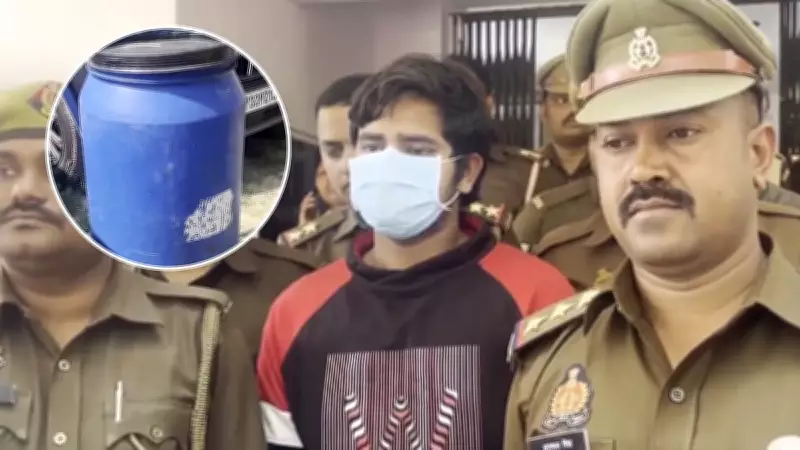
In a chilling courtroom admission that has sent shockwaves through Lucknow, a young man accused of the brutal murder of his own father has described the horrific act as nothing more than "a mistake." The case involves Akshat Pratap Singh, who stands accused of shooting his father dead and then proceeding to chop up the body in a gruesome display of violence.
Court Premises Confrontation Reveals Startling Admission
Confronted by mediapersons within the court premises, Akshat Pratap Singh offered a brief but deeply unsettling explanation for his alleged actions. When asked about the crime, he stated plainly in Hindi, "Galti se ho gaya," which translates to "It happened by mistake." This statement has left investigators, legal experts, and the public grappling with how such a calculated and violent act could possibly be categorized as accidental.
The confrontation took place as Singh was being escorted through the court complex, with journalists pressing him for details about the alleged murder and subsequent dismemberment. Witnesses describe a tense atmosphere as reporters sought to understand the motive behind one of Lucknow's most disturbing recent crimes.
Silence When Questioned About the Nature of the 'Mistake'
When mediapersons followed up by asking how shooting someone and then chopping up their body could possibly happen "by mistake," Singh fell into complete silence. He offered no further explanation, no elaboration on what circumstances might have led to such a catastrophic series of events being characterized as accidental.
This refusal to provide context has only deepened the mystery surrounding the case. Legal analysts note that such an admission, while potentially damaging to any defense strategy, raises more questions than it answers about Singh's state of mind and the events leading up to the alleged crime.
Background of the Gruesome Lucknow Crime
The case first came to light when authorities discovered the dismembered remains of Singh's father. Investigators have been piecing together a timeline of events that allegedly began with a fatal shooting and culminated in the systematic dismemberment of the victim's body.
While specific motives remain unclear pending further investigation, the brutality of the alleged crime has captured public attention across Uttar Pradesh. The fact that the accused is the victim's own son adds a particularly disturbing dimension to an already horrific case.
Police sources indicate that forensic evidence and witness statements are being carefully examined to reconstruct exactly what transpired in the hours and days surrounding the murder. The prosecution is expected to argue that the meticulous nature of the dismemberment contradicts any claim of accidental death.
Legal Proceedings and Public Reaction
The case is now proceeding through Uttar Pradesh's judicial system, with Singh facing serious charges that could result in severe penalties if convicted. His brief statement to media has already become a focal point of discussion among legal observers and the general public alike.
Residents of Lucknow have expressed shock and disbelief at both the nature of the crime and the accused's characterization of it as a mistake. Many are questioning what circumstances could possibly lead someone to describe such deliberate, violent actions in these terms.
As the legal process continues, all eyes will be on how this defense strategy unfolds and whether Singh's legal team will attempt to build upon his "mistake" admission or pursue an entirely different approach. The prosecution, meanwhile, is expected to emphasize the premeditated nature of both the shooting and the subsequent dismemberment.
The case serves as a grim reminder of the complex psychological and social factors that can underlie family violence, while also highlighting the challenges faced by India's judicial system in adjudicating crimes of such extreme nature.