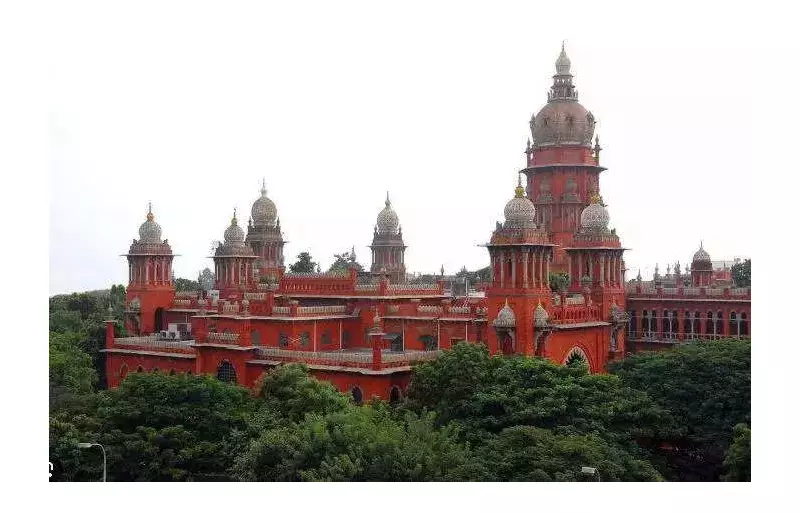
In a landmark judgment that reinforces the rights of all employees, the Madras High Court has ruled that every worker in an establishment, regardless of their rank or classification, is entitled to become a member of a trade union and participate in elections for its recognition.
Court Dismisses Plea Challenging Inclusion of Officers
The ruling was delivered by Justice D Bharatha Chakravarthy while dismissing a petition filed by the Tamilnadu Nugrporul Vaniba Kazhaga Anna Thozhir Sangam. This registered trade union, which operates within the Tamil Nadu Civil Supplies Corporation (TNCSC), had challenged the inclusion of Class I and Class II officers of the corporation in the trade union's voter list.
The dispute arose after the election officer and additional labour commissioner in Chennai issued a notification on October 27. This notification included Class I and Class II officers as eligible voters for an election meant to grant recognition to trade unions within TNCSC.

The petitioner union argued that these officers should not be allowed to vote because they are not "workmen" and that their inclusion could not be justified for the purpose of recognising a union for negotiations with the management. They also raised concerns about the inclusion of seasonal workers, whom the corporation often claims are not on its regular rolls.
Judgment Relies on New Industrial Relations Code
Justice Chakravarthy, however, refused to accept these arguments. The court's decision heavily relied on the provisions of the Industrial Relations Code, 2020. The judge noted that this code has introduced, for the first time, a clear statutory framework that makes it mandatory for managements to recognise trade unions for negotiation purposes.
The judgment clarified the new mechanism for union recognition. "If any trade union has the majority (51%) and above, it has to be recognised as the sole representative of the workers for the purpose of negotiating," the judge stated. "If there is no trade union with 51% or more, a negotiating council has to be constituted by including the representatives of all the trade unions which secure 20% or above."
This interpretation implies that for a union to secure the crucial 51% majority or to be part of a negotiating council with 20% support, it must be able to draw membership from across the workforce, including officers.
Implications for Labour Relations in Tamil Nadu
By declining to quash the October 27 notification, the court has directed the Tamil Nadu Civil Supplies Corporation to proceed with the election as originally planned. This verdict sets a significant precedent for labour relations across the state and potentially the country.
The ruling effectively breaks down traditional barriers between different cadres of employees within the same organisation. It establishes that the right to collective bargaining and association under the new code is expansive and inclusive.
This decision is expected to empower a larger section of the workforce, allowing managerial and supervisory staff (Class I & II) to formally align with the interests of their junior colleagues, potentially leading to more unified and stronger worker representation in negotiations with corporate management.