

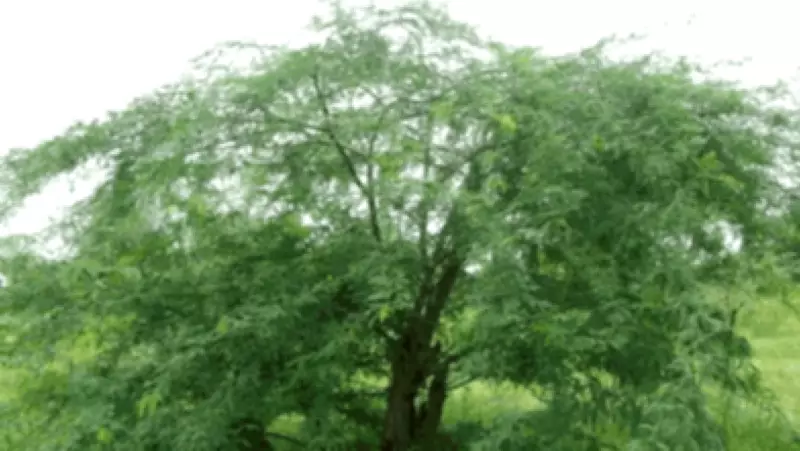
Madras High Court Mandates Statewide Eradication of Invasive Seemai Karuvelam
The Madras High Court has issued a landmark order on Wednesday, directing the comprehensive eradication of the invasive species Prosopis juliflora, commonly known as seemai karuvelam, from Tamil Nadu. This initiative, named 'Sezhumai Karuvoolam' or fertile repository, aims to restore ecological balance across the state.
Special Committee Appointed for Supervision
To oversee the execution of this ambitious project, the court has appointed a special committee comprising two former judges: Justice A Selvam and Justice V Bharathidasan. This committee will supervise all actions taken for the removal and management of the invasive species, ensuring compliance with the court's directives.
Strict Deadlines for Private and Public Land Clearance
The court has set stringent timelines for the eradication process. Private landowners are required to uproot and remove seemai karuvelam from their properties within 30 days from the date of the order. Failure to comply will result in Block Development Officers (BDOs) inspecting and uprooting the trees, with costs recovered from landowners at rates of Rs 5,000 per acre for dense, mature vegetation and Rs 2,000 per acre for less dense areas.

For public lands, the state government will undertake the removal. The court has mandated that identification and auctioning of removed materials be completed within four months across each district, followed by full removal within an additional six months. The process will be conducted systematically, akin to combing operations, progressing from villages to firkas, taluks, and ultimately declaring districts free of Prosopis juliflora.
Mechanical Uprooting and Native Species Replantation
In its order, a special bench of Justice N Sathish Kumar and Justice D Bharatha Chakravarthy emphasized that all forms of the invasive species—trees, plants, and roots—must be mechanically uprooted, removed, and disposed of from their locations. Wherever feasible, native species are to be planted, cared for, and grown to promote biodiversity and environmental health.
Exceptions have been made for sensitive areas like Vedanthangal, where seemai karuvelam serves as nesting sites for birds. In such cases, removal will be phased, with simultaneous alternative arrangements, such as planting other species, to minimize disruption to wildlife.
District Collectors as Central Authorities
The court has designated district collectors as the central authorities responsible for the eradication efforts. Their duties include mechanically removing existing trees and plants on both private and public lands, preventing further growth of the invasive species, and planting native species on all public lands within their jurisdictions.
Digital Monitoring and Public Engagement
To ensure transparency and public involvement, the court directed the state environment secretary to create a dedicated webpage or dashboard on the government website. This platform will regularly update information on removal progress, auction details, quantities removed, saplings replanted, and areas declared free of Prosopis juliflora.
Additionally, an exclusive mobile phone number will be maintained for the project, linked to all social media platforms. Citizens can report sightings of seemai karuvelam by posting geotagged pictures or providing location details, which will be promptly forwarded to the relevant district collector for action.
Background and Legal Context
The order was passed in response to a batch of petitions, including one filed by MDMK leader Vaiko, advocating for the complete eradication of the invasive species from Tamil Nadu. The court's comprehensive directives aim to address environmental concerns and promote sustainable land management practices across the state.






