

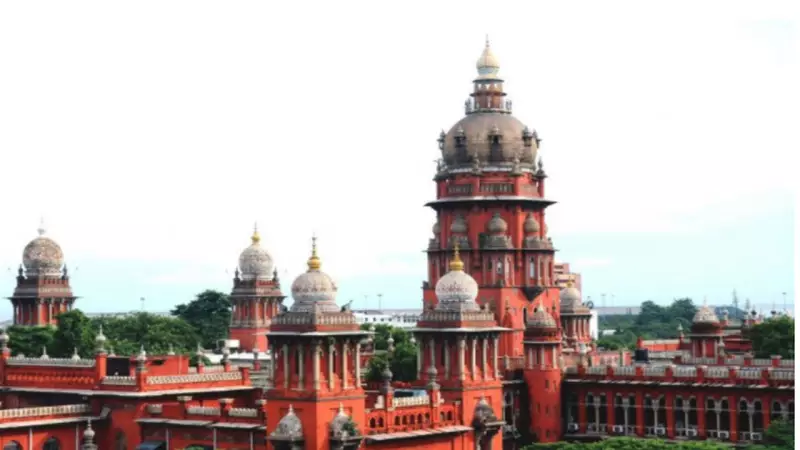
In a significant ruling, the Madras High Court has firmly stated that no caste can assert a right over the administration of a temple, clarifying that a caste does not constitute a religious denomination. The court emphasized that appointments made by authorities without considering caste should not be criticized.
Court Upholds Government's Trustee Appointments
Justice D Bharatha Chakravarthy delivered these observations on Saturday while upholding an order passed by the Tamil Nadu government. The order appointed five non-hereditary trustees to the Arulmigu Sri Thanthondreeswarar Temple located in Belur, Salem district.
The judge explicitly rejected a petition challenging the appointments, which was filed on caste grounds. "No caste can have any right in respect of any temple. Therefore, the prayer made by the petitioner on caste basis stands rejected as opposed to public policy, and it has also been held that caste is not a religious denomination for that purpose," Justice Chakravarthy stated while disposing of the plea moved by an individual named Sivaraman.

Petitioner's Claims and Court's Scrutiny
The petitioner, Sivaraman, had argued that he belonged to a specific caste whose members historically held the first right to pull the temple car. He also claimed that the temple was traditionally administered by people from that same caste. Since no member of his caste was appointed as a trustee in the recent government order, he approached the court seeking redress.
His second contention focused on geographical representation. He stated that Chinnamanaickkenpalayam is an adjacent village whose residents also worship the deity at the same temple. He pointed out that in the past, individuals from that village had participated in the temple's administration. Furthermore, he highlighted that out of the five trustees appointed by the government, three belonged to the same caste, a situation he argued should not be permitted.
Court's Directive on Future Appointments
The court duly recorded these submissions but found the current appointments to be legally valid. However, it issued an important directive for future considerations. The bench advised that authorities must take care to provide representation to the adjacent village of Chinnamanaickkenpalayam when appointing trustees in alternative cycles every two years.
"Since the appointment has been validly made, no other legal impediment is brought to the notice of this court. Hence the prayer in the writ petition cannot be granted as prayed," the court concluded, thereby dismissing the petition entirely.
This ruling reinforces the principle of secular administration in religious institutions and underscores the legal distinction between caste identity and religious denomination status under the law.






