Madras High Court Intervenes in Temple Contempt Case
A significant legal development has unfolded in Madurai as a division bench of the Madras High Court has issued an interim stay on contempt of court proceedings. These proceedings were initiated by a single judge against key authorities including the Madurai district collector and the Thiruparankundram temple administration. The case centers around the contentious Karthigai Deepam festival arrangements at the historic Subramaniya Swamy temple.
Legal Proceedings and Stay Order Details
The bench comprising Justice N Sathish Kumar and Justice M Jothiraman granted the interim stay while hearing multiple appeals filed by the concerned authorities. These appeals challenged the orders previously passed by the single bench regarding the contempt proceedings. The division bench has scheduled further hearing of these appeals for April 8, 2024, allowing time for proper legal consideration of the complex issues involved.
This legal intervention comes after Justice G R Swaminathan had earlier posted the contempt proceedings to March 18. The delay occurred when the temple's board of trustees requested additional time to deliberate on the court's suggestion regarding symbolic prayers at the sacred site.

Background of the Temple Dispute
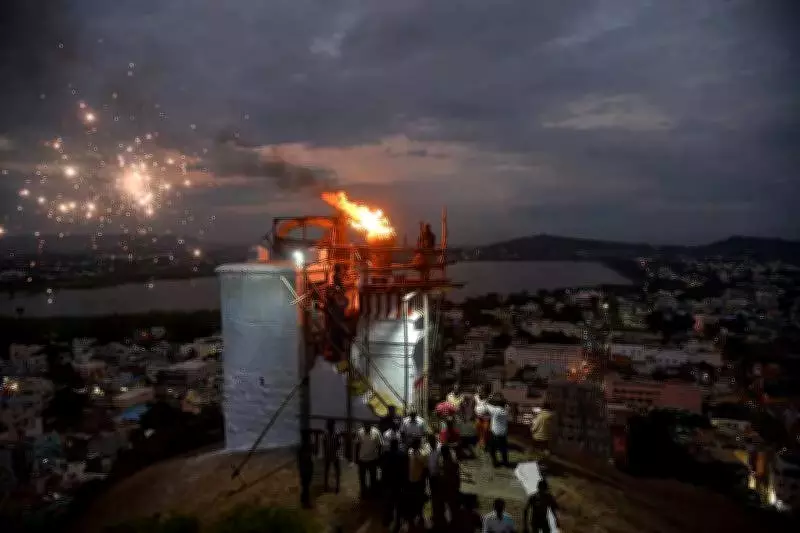
The controversy revolves around the traditional lighting of the Karthigai Deepam lamp atop Thiruparankundram hill. Justice Swaminathan had proposed a compromise solution, suggesting that respect for the court's order could be demonstrated by permitting exactly five designated persons to offer symbolic prayers at the lower peak of the hillock where the deepathoon (lamp structure) is located.
The judge specifically clarified:"This entire exercise can be confined to 15 minutes. This is only a suggestion and not a direction."
The temple authorities expressed the need for careful consideration of this suggestion, particularly after consulting with the Hindu Religious and Charitable Endowments (HR and CE) department, which oversees temple administration in Tamil Nadu.
Administrative Concerns and Legal Position
Madurai District Collector K J Praveen Kumar had previously filed an affidavit outlining the administration's position. He stated clearly that the district administration would implement the high court's order only if there were no law and order concerns in the area. This precautionary stance reflects the sensitive nature of religious ceremonies in the region.
The collector further clarified that the prohibitory orders issued under Section 163 of the Bharatiya Nagarik Suraksha Sanhita (BNSS), 2023, did not prevent temple officials from lighting the lamp in accordance with the high court's judgment. This legal distinction between general prohibitory orders and specific religious permissions forms a crucial aspect of the ongoing legal discussion.
Broader Implications and Next Steps
The case highlights the delicate balance between religious traditions, administrative responsibilities, and judicial oversight. The Thiruparankundram temple, dedicated to Lord Murugan, holds significant cultural and religious importance in southern Tamil Nadu, making any decisions about its rituals particularly sensitive.
The interim stay provides temporary relief to the authorities while allowing the legal process to proceed systematically. All parties now await the April 8 hearing, where the division bench will further examine the appeals and potentially provide more definitive guidance on this complex matter involving religious practice, public safety, and judicial authority.