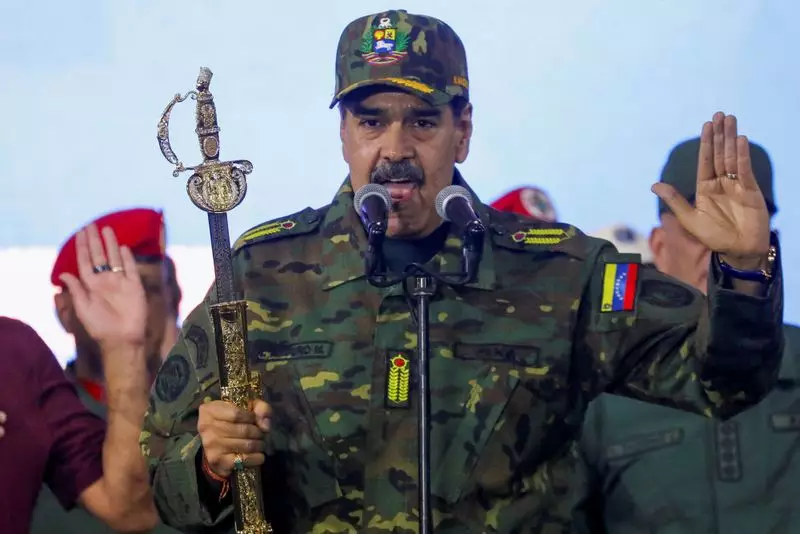
Venezuela has entered a new political chapter with the departure of its long-standing leader, Nicolás Maduro. However, the transition is far from a clean break with the past. A powerful group of Maduro's closest allies, who formed the backbone of his administration, continue to hold significant sway over the nation's critical institutions, casting a long shadow over the future of Venezuelan governance.
The Inner Circle That Refuses to Fade
Despite Maduro's exit from the presidency, the figures who were instrumental in maintaining his grip on power remain firmly entrenched. This continuity suggests that while the face of leadership has changed, the underlying power structures of the previous era are proving remarkably resilient. The key players in this ongoing influence are individuals who controlled Venezuela's economic, judicial, and security apparatus.
Foremost among them is Delcy Rodríguez, the former Vice President and a formidable political operator. Rodríguez, who also served as Maduro's chief diplomat, is widely seen as a central figure in the Chavista movement. Her deep knowledge of the state machinery and international relations makes her a pivotal power broker. Similarly, Tareck El Aissami, the former oil minister, retains considerable influence. His tenure saw him at the helm of Venezuela's crucial but crumbling oil industry, and his network within the economic and security sectors is extensive.
Another stalwart is Diosdado Cabello, the former head of the pro-government Constituent Assembly and a high-ranking member of the United Socialist Party of Venezuela (PSUV). Often described as the regime's ideological enforcer, Cabello continues to wield substantial political clout. The enduring presence of these figures indicates a calculated strategy to preserve the core interests of the Chavista elite, even as the formal leadership changes hands.
Control Over Levers of Power
The continued dominance of Maduro's allies is not merely symbolic; it is institutional. These individuals maintain control or strong influence over key pillars of the state. This includes the military and security forces, which have historically been a cornerstone of support for the government. The loyalty of the armed forces leadership, cultivated over years, appears unchanged.
Furthermore, influence extends over the judiciary and electoral council, bodies that have consistently ruled in favour of the ruling party, marginalising the opposition. The state-owned oil company, PDVSA, and other vital economic entities also remain under the purview of figures from the old guard. This control ensures that the new administration, regardless of its public stance, may find its policy options constrained by the entrenched interests of its predecessors' inner circle.
Implications for Venezuela's Future
This scenario presents a complex and challenging path forward for Venezuela. The persistence of Maduro's powerful network raises critical questions about the genuineness of the political transition and the potential for substantive reform. For the Venezuelan populace, weary of economic hardship and political strife, it signals that real change may be slow and fraught with obstacles.
Internationally, this power dynamic will be closely watched. Foreign governments and investors seeking to engage with the new Venezuelan leadership will have to navigate this shadow structure of influence. It complicates efforts to stabilise the economy, rebuild institutions, and foster national reconciliation. The situation underscores that in Venezuela, political power is not solely vested in the presidency but is distributed among a resilient network of loyalists who continue to command the country's vital organs.
In conclusion, while the exit of Nicolás Maduro marks the end of an era, the enduring grip of his top allies suggests that the more things change, the more they may stay the same. The true test for Venezuela's future will be whether this powerful old guard becomes a force for managed stability or an anchor preventing the country from sailing toward a truly new and democratic horizon.