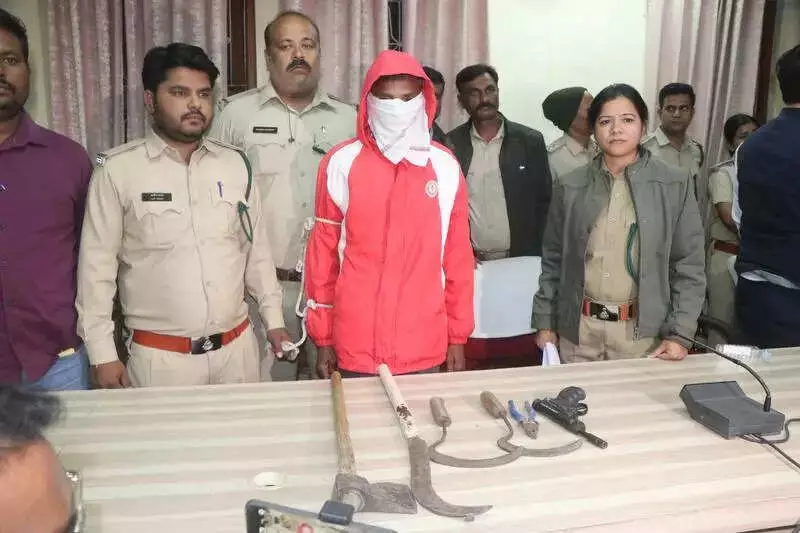
In a significant breakthrough, the Indore Forest Department has arrested a man for the brutal killing and mutilation of a three-year-old male leopard. The arrest on Wednesday followed a crucial clue discovered on a mobile phone belonging to the suspect's 12-year-old son.
Mobile Phone Video Provides Crucial Evidence
The case, which began when the leopard's mutilated carcass was discovered in the Doublechauki forest area on November 29, saw a major turn after investigators scrutinized nearly 100 people from nearby villages. Indore DFO Pradeep Mishra revealed that a three-member investigation team found a video on a child's phone that changed the course of the probe.
"A video of the same leopard was discovered on a mobile phone carried by a 12-year-old child. The videos clearly showed that all the parts were intact when the recording was done," stated Mishra. This evidence proved that the leopard was alive and unharmed at the time of the recording, directly contradicting the initial scene of the crime where the animal was found with its front paws, claws, and canine teeth severed.

Confession and Cause of Death Revealed
Based on this digital evidence, the authorities took Dinesh Mevada (35), a resident of Gadi village and the boy's father, into custody. During interrogation, Mevada confessed to the crime. He admitted to regularly setting up iron rope nooses, or snares, to hunt wild boar and other animals in the forest.
According to his statement, the young leopard accidentally got trapped in one of these illegal snares. DFO Pradeep Mishra confirmed that the postmortem examination report aligned with Mevada's account, establishing the cause of death as suffocation from the iron noose. The mutilation, a clear sign of poaching, was carried out after the animal died.
A Stark Reminder of Wildlife Threats
This incident highlights the severe threat that illegal snaring poses to India's wildlife, often catching non-target species like leopards. The arrest underscores the forest department's use of modern investigative techniques, including digital evidence gathering, to combat wildlife crime.
The case serves as a grim reminder of the human-wildlife conflict and illegal hunting practices prevalent near forest fringes. The forest officials have emphasized strict action against those involved in poaching and setting up unauthorized traps, which endanger protected species.