Surrendered Maoist Leader Exposes International Training Network and Arms Production
In a significant revelation, surrendered senior Maoist leader Tippiri Thirupathi, also known as Devji, has provided Telangana police with detailed information about the banned outfit's extensive military training connections with international groups, including the Liberation Tigers of Tamil Eelam (LTTE), as well as Maoist organizations in the Philippines and Nepal.
The interrogation has shed light on the Maoists' sophisticated military infrastructure, which combined field innovation, arms production, and external training inputs over many years. However, sustained pressure from security forces has severely weakened these capabilities, according to police sources.
International Training Links and Military Ambitions
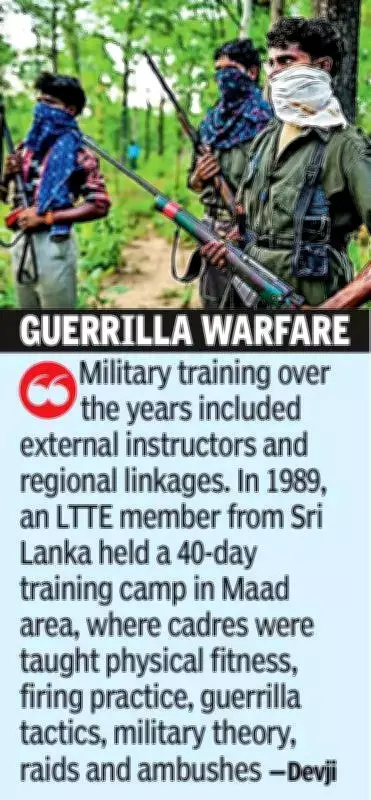
Devji disclosed that the Maoists pursued a wide range of military training programs with foreign groups. In 1989, an LTTE member from Sri Lanka conducted a 40-day training camp in the Maad area, teaching cadres physical fitness, firing practice, guerrilla tactics, military theory, raids, and ambushes.

Further international connections included:
- Communication training in 2000 by an instructor from the Philippines in the Maad area
- Senior Maoist leader Basvaraj traveling to Nepal in 1995 to train cadres of the Nepal Communist Party
- Maoists from Telangana also training their counterparts in Nepal
The questioning revealed that the organization explored attempts to procure drones and develop improvised systems for breaching walls, demonstrating the scale of their military ambitions.
Weapons Manufacturing and Technical Capabilities
Devji provided detailed information about the Maoists' arms production and technical department. The central military commission oversaw efforts to improve technical capabilities, with weapons including:
- AK rifles, SLRs, LMGs, and INSAS rifles
- .303 rifles, 12-bore guns, carbines, and tapanchas
- Barrel grenade launchers developed for their battalion by Madivi Hiduma
- Grenades and 8 mm arms
Senior functionaries such as CCMs, SCMs, and DVCMs typically carried AK rifles, while ACMs, ACSs, and PMs were generally assigned SLRs.
Arms Production Units Across India
The interrogation revealed specific locations where the Maoists operated arms manufacturing workshops:
- Bhopal and Rourkela in 2007 for making grenades and spare parts
- Kolkata in 2011 for similar manufacturing activities
- South Bastar and the Karreguttalu forest area, though this activity has now slowed or stopped
Devji stated that PLGA teams manufactured barrel grenade launchers, highlighting the organization's domestic production capabilities.
Impact of Security Pressure and Financial Operations
Sustained operations by security forces have dramatically impacted the Maoists' technical department. After the arrest of Maoist tech chief Sadanala Ramakrishna in 2012, the department's work largely came to a halt. Devji confirmed that currently, no arms are being manufactured due to continuous security pressure.
The questioning also revealed details about the organization's financial operations:
- Funds were collected mainly from contractors involved in sand mining, beedi leaf trade, and construction works
- Businessmen also contributed to party funds
- Higher committees passed funds to lower levels
- Under the outfit's economic policy, money was retained for a maximum of three years, mostly kept as gold coins
Military Leadership Training Programs
Devji described the military leadership training program as a refresher course held every two to three years, primarily in South Bastar and Maad. The curriculum covered essential combat skills including:

- Guerrilla tactics and formations
- Raids and ambush techniques
- Movement patterns and field strategies
The interrogation has provided crucial insights into both the historical capabilities and current vulnerabilities of the Maoist organization's military wing. The revelations about international training links, domestic arms production, and the impact of sustained security operations paint a comprehensive picture of the banned outfit's operations and their gradual decline under pressure from law enforcement agencies.