

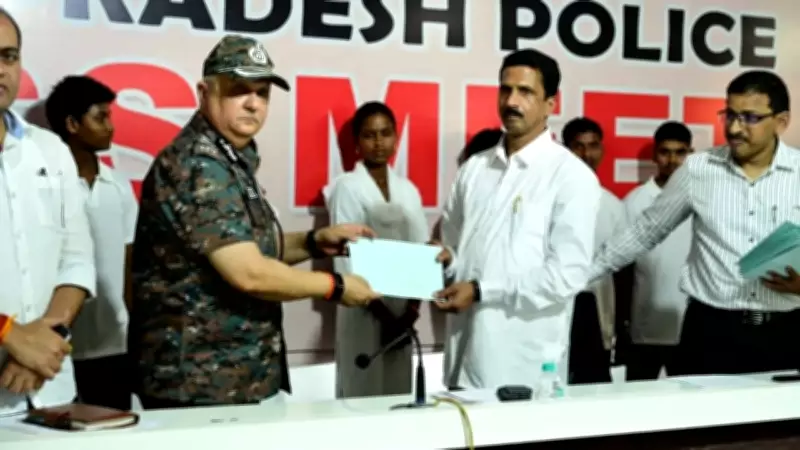
Senior Maoist Strategist Suresh Surrenders, Crippling AOB Committee Leadership
In a significant blow to left-wing extremism in eastern India, senior Maoist leader Chelluri Narayana Rao, widely known by his alias Suresh, has surrendered to authorities. Security agencies now assert that this development has effectively dismantled the top leadership structure of the Andhra–Odisha Border (AOB) Special Zonal Committee of the CPI (Maoist).
Military Strategist with Decades of Violent History
Considered a key military strategist within the Maoist hierarchy, Suresh is alleged to have been involved in numerous high-profile violent incidents spanning several decades. His operational portfolio includes:
- The notorious Koraput armoury raid that significantly bolstered Maoist weapon supplies
- Multiple coordinated attacks in the Udayagiri, Nayagarh, and R. Udayagiri regions
- Leading a five-member action team responsible for the 2021 killing of Circle Inspector Gandhi and his gunman Chiranjeevi inside a court premises in Salur town, Vizianagaram district
Police officials have revealed that the 2021 court attack was allegedly carried out as retaliation for a 1998 police encounter at a tribal hamlet under Komarada police station limits along the Andhra–Odisha border. That earlier incident resulted in the deaths of 13 Maoists, including senior leader Ganti Ramesh alias Rajanna.

Four Decades of Underground Militancy
A native of Bathupuram village in Srikakulam district, Narayana Rao is believed to have joined the Maoist movement during the mid-1980s, reportedly influenced by leaders of the then-active People’s War Group. Having studied up to intermediate level before going underground, his militant career spanned nearly four decades of continuous operation in forest areas along the volatile Andhra–Odisha border region.
During his extensive underground tenure, Suresh operated across multiple Maoist units including:
- Kondabaridi dalam
- Chandanagiri dalam
- Uddanam dalam
His organizational ascent saw him rise progressively through Maoist ranks from district committee to state committee levels, eventually reaching the influential AOB Special Zonal Committee leadership.
Violent Campaign Against Security Forces
While operating in Srikakulam district, Suresh was allegedly involved in multiple attacks targeting police establishments, including a significant strike on a police picket in the Palasa area. Officials have also linked him to the killing of an intelligence officer operating in the region.
Despite enduring profound personal tragedies—including the deaths of both his spouses, who were reportedly Maoist cadres killed in separate encounters—Suresh maintained unwavering commitment to Maoist ideology throughout his militant career.
Strategic Implications for Regional Security
Security officials have described Suresh's surrender as a watershed moment in ongoing counter-insurgency efforts aimed at curbing Maoist activity in the strategically important AOB region. His extensive operational knowledge, spanning nearly forty years of continuous militant activity, represents a significant intelligence gain for security forces.
The dismantling of the AOB Special Zonal Committee's top leadership structure creates a substantial organizational vacuum within Maoist ranks in this critical border region, potentially disrupting their operational capabilities and command structure for the foreseeable future.






