

The Unlikely Spark: How a 1984 Petition Ignited India's Environmental Justice Movement
In 1984, when environmental lawyer MC Mehta filed a petition in the Supreme Court of India highlighting the dangers posed by hazardous industries operating in Delhi, the judicial system did not view environmental concerns as pressing or immediate emergencies. As Mehta recalled in an interview with TOI, the case was listed for hearing only after several months, reflecting the prevailing attitude that ecological matters were not urgent priorities.
"Though water and air acts were present on paper, nobody used to give weight to environmental matters then," Mehta stated, underscoring the lack of enforcement and seriousness accorded to existing environmental legislation at the time.
A Turning Point: The Oleum Gas Leak Incident
Within days of Mehta's petition being filed, a critical event unfolded that would dramatically alter the course of environmental litigation in India. A severe gas leak erupted from a chemical unit in Delhi, spreading panic and fear among residents in the surrounding neighborhoods. This incident served as a stark validation of the very risks Mehta had warned about in his writ petition.

Seizing the moment, Mehta immediately approached senior judges of the Supreme Court on the same day, presenting the original petition that had forewarned of such dangers. The judges, confronted with the tangible emergency, recognized the urgency. They heard the matter promptly and issued notices, setting in motion what would become one of the most consequential environmental cases in Indian legal history—the landmark Oleum Gas Leak Case.
In this pivotal judgment, the Supreme Court established the doctrine of "absolute liability" for industries handling hazardous substances, a legal principle that has since formed the bedrock of environmental accountability in the country.
The Foundation for a Lifelong Crusade
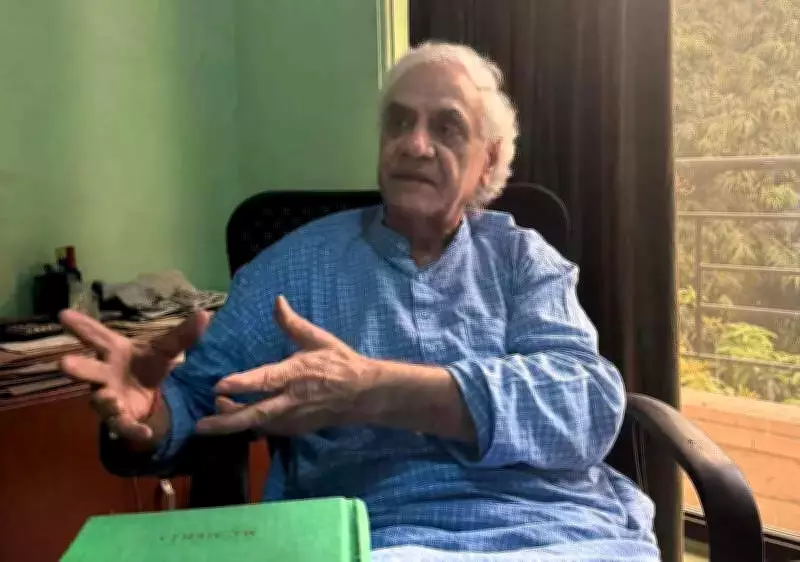
For MC Mehta, now 79 years old, this case was merely the beginning of a lifelong crusade. He subsequently filed a series of groundbreaking public interest litigations targeting some of India's most pressing environmental crises. These included cases addressing the severe pollution plaguing the Ganga River and its tributaries, the dangerous levels of vehicular emissions in Delhi, the contamination of groundwater in Rajasthan's Bichhri region, and a crucial ban on mining activities in the ecologically sensitive Aravali hills.
His 1985 writ petition on Delhi's vehicular pollution, which was finally disposed of recently, became a cornerstone in the capital's protracted battle for cleaner air. "The court has given many orders with full reasoning—it's just their enforcement. If 90% enforcement happens, it would cause massive improvement in pollution," Mehta emphasized, pointing to ongoing issues like deforestation, river pollution, and growing mountains of waste.
He argued that strong laws require equally strong enforcement agencies to be effective. "The laws are strong, and if agencies become strong in enforcement, only then they can save human lives. People who breathe polluted air fall sick; they need treatment. How many hospitals will you build?" Mehta questioned, highlighting the public health costs of environmental neglect.
Institutional Gaps and the Need for Political Will
Mehta also critiqued the current institutional framework for environmental justice. While the establishment of environmental courts was initially proposed, similar to consumer courts, the National Green Tribunal (NGT) was constituted with only five benches across the entire country. "At least one environment court should be present in every district. India has over 600 districts, and how can just five benches serve the entire country?" he wondered, attributing this shortfall to a persistent lack of political will on environmental matters.
He believes tangible change is possible only when citizens collectively pressure their local representatives. "When citizens collectively pressurised their local councillors or MLAs, only then it could lead to a visible change," he asserted.

The Ecological Role of Delhi's Natural Buffers
Reflecting on Delhi's unique geography, Mehta described the capital's ridges and the Aravali hills as vital natural buffers that purify air when the wind blows. "It should be considered as an installed oxygen supply. If you cut trees in them, from where will you get cylinders?" he asked metaphorically, stressing the irreplaceable value of these ecosystems. Mehta continues to fight for environmental protection through various cases in courts and the NGT.
Environmental Protection as a Fundamental Duty
Despite his monumental contributions, MC Mehta remains characteristically humble about his legacy. He frames his life's work not as an extraordinary achievement, but as the fulfillment of a basic civic obligation. "Article 51A lists Fundamental Duties, and among them is the duty of every citizen of India to protect the environment, rivers and have compassion for animal life. This is our duty," he stated, grounding his activism in the constitutional ethos of India. His journey from a single petition in 1984 to becoming a pillar of environmental jurisprudence demonstrates how one individual's perseverance can reshape a nation's legal and ecological landscape.





