

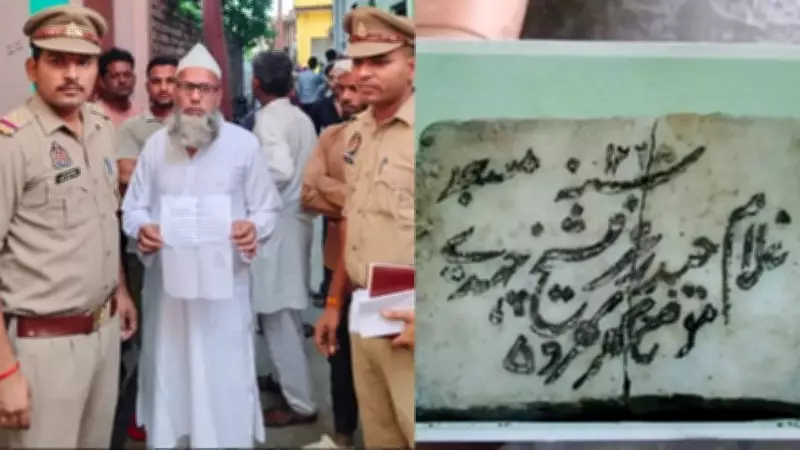
A mosque located within the premises of a police station in Uttar Pradesh's Meerut district has become the focal point of a land ownership dispute after authorities alleged that the structure stands on government land belonging to the police department.
Survey Triggers Controversy
The controversy erupted following a recent revenue survey, which purportedly found that the Jama Masjid, commonly known as the "Thane Wali Masjid", was built on a portion of land recorded in the name of the Kharkhoda police station. Acting on the survey findings, police have issued a seven-day notice seeking ownership documents and directing the mosque management to remove the alleged encroachment.
Historical Land Records
Officials stated that the Kharkhoda police station, situated on the Meerut-Bulandshahr road, is a pre-Independence establishment. Revenue records indicate that 6,450 square metres of land under Khasra number 1217 has been registered in the name of the police station for decades. According to the administration, a portion of this land was encroached upon over the years, leading to the construction of the mosque.

Kithore circle officer Pramod Kumar Singh said the revenue department's demarcation exercise identified the disputed site as part of the police station property. As part of the legal process, a notice was issued asking the mosque management to furnish relevant documents and remove the alleged unauthorised construction within seven days. Kharkhoda station house officer Rajpal Singh confirmed that the notice was served on Saturday and authorities are awaiting a response.
Mosque Authorities Reject Claims
Rejecting the police claims, imam Abdul Ghaffar asserted that the land had been recorded in the name of the Waqf Board in 1985 and that documentary evidence supporting this claim is available. Additional superintendent of police (rural) Abhijeet Kumar noted that the mosque is not a recent construction and that the issue surfaced only after the latest land demarcation exercise.
Officials said the next course of action will depend on verification of ownership records and scrutiny of revenue documents. The dispute highlights ongoing tensions over land ownership and religious structures in the region.






