

SIT Investigation Uncovers New Angles in Mohali Kidney Transplant Racket
The probe into the alleged kidney transplant racket in Mohali has taken a significant and concerning turn, with the Special Investigation Team (SIT) now suspecting that the transplant may not have been conducted at the Kharar-based hospital at all. This revelation has deepened the mystery surrounding the high-profile case, raising questions about the location and execution of the illegal medical procedure.
Hospital Under Scrutiny for Lack of Mandatory Permissions
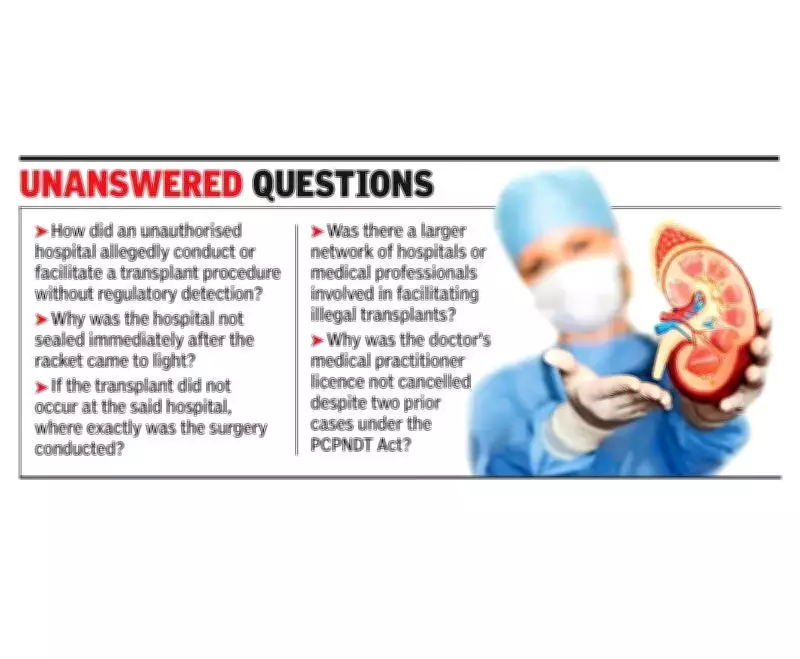
Led by superintendent of police (SP) Manpreet Singh, the SIT indicated that investigators are actively exploring the possibility that another hospital or an external operation theatre (OT) facility, along with a qualified transplant surgeon, may have been involved. If the transplant did occur at the Kharar hospital, then there is a strong possibility of the involvement of a specialist, given the complexity of the procedure.
Officials pointed out that the hospital in question did not possess the mandatory permissions required to carry out kidney transplant procedures under the Transplantation of Human Organs and Tissues Act, 1994. This has raised serious concerns about how such a high-risk and regulated medical procedure could have been attempted or claimed without statutory approvals. Although the hospital had an ICU, its standards to treat pre- or post-transplant patients are also yet to be established, adding to the regulatory failures.

Examination of Legal Evaluation Mechanisms and Donor-Recipient Details
SP Manpreet Singh stated, "The SIT is also examining whether the hospital had constituted the legally required evaluation mechanism, including a panel of transplant experts, a local social worker, and a gazetted officer before conducting the kidney transplant." This panel is mandated to verify the legitimacy of donor-recipient relationships and scrutinise financial transactions to rule out any commercial dealings, which is particularly critical in cases involving non-related donors.
Preliminary findings suggest that the alleged donor is a Nepal national, while the recipient hails from Rajasthan, making the case fall under the "non-relative donor" category that requires stricter scrutiny and clearance from the district- or state-level authorization committee. Investigators are seeking a detailed report from the civil surgeon's office to verify whether any application or approval process was initiated, highlighting gaps in oversight.
Probe into Doctor's Medical Licence and Broader Network Suspicions
Adding another layer of concern, the SIT is probing why the accused doctor's medical licence was not cancelled despite being booked twice earlier under the Pre-Conception and Pre-Natal Diagnostic Techniques (PCPNDT) Act in 2018 and 2023. The authorities reiterated that as per regulations overseen by bodies like the National Organ and Tissue Transplant Organization, no organ transplant can be conducted without prior approval from the designated authorization committee. Applications must be routed through authorised hospitals, and foreign donors require additional clearances, including embassy verification.
The investigation continues to widen, with officials not ruling out the involvement of a broader interstate or cross-border network. The SIT has assured that all angles, including regulatory lapses and possible collusion, will be thoroughly examined to uncover the full extent of the racket.
Civil Surgeon's Insights on Hospital Operations and Sealing
In a related development, civil surgeon Dr. Sangeeta Jain provided crucial insights into the hospital's operations. She revealed that Dr. Manpreet has been operating the said hospital in Kharar, which does not have any requisite permission to run a hospital, and this went unnoticed for some time. Dr. Jain explained, "We had allowed a licence under the PNDT Act in her mother's name, and the land was in the name of Dr. Manpreet. However, when teams raided in 2023, an ultrasound machine was sealed, and her mother's hospital operation licence under the PNDT Act was terminated."

She added that as the land given for establishing a hospital remained in the name of Dr. Manpreet and another person who have now been booked, it is unclear whether she was conducting any surgeries or had engaged any other specialists to do so. "This will only be ascertained once she is arrested," Dr. Jain noted. However, she confirmed that the hospital premises have now been sealed, ensuring no further activity occurs there.
The civil surgeon also stated that once the SIT probe is completed, a report will be sent to the Punjab Medical Council and the Indian Medical Association, informing them of the illegal activities undertaken at the hospital. This step aims to prevent similar incidents in the future and hold accountable those involved in the illicit operations.





