In the heart of India, a village has earned an ominous nickname that echoes far beyond its borders. Welcome to 'USA' – not the country, but 'Umarti Sikligar Arms', a hub for illegal firearm manufacturing in Madhya Pradesh's Barwani district. A recent high-stakes police raid has pulled back the curtain on this clandestine industry, revealing its connections to violent crimes across states.
The Raid That Shook 'The Village of Pistols'
In the pre-dawn hours of November 22, 2025, a force of 105 police personnel descended upon Umarti village. Led by Pune's Deputy Commissioner of Police, Somay Munde – a Shaurya Chakra awardee for anti-Maoist operations – the team included officers from Pune, Jalgaon, and Barwani. Their mission: dismantle the illegal gun-making units that had turned Umarti into a notorious supplier.
The operation was meticulously planned. "We started the raid at 4 am, and carried arms, ammunition and bullet-proof jackets," DCP Munde stated. The police set up a temporary wireless network and equipped personnel with body cameras streaming live feed to a command center in Pune. Drones buzzed overhead for aerial surveillance, leaving little to chance.

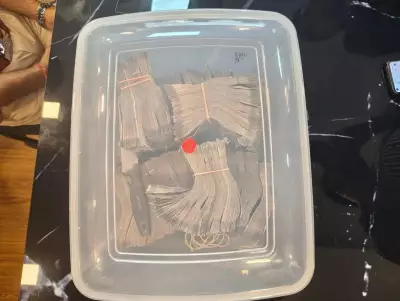
The results were staggering. Authorities destroyed 50 kilns used for molding weapons across four illegal units. The seizure list included country-made pistols, cartridges, magazines, over a hundred barrels, 14 grinding machines, 15 pistol bodies, sharp weapons, and numerous firearm parts buried underground. Forty-seven individuals, all from the Sikligar community, were detained, though only ten remained in custody afterward.
A Warning Sign and a Cross-Border Trade
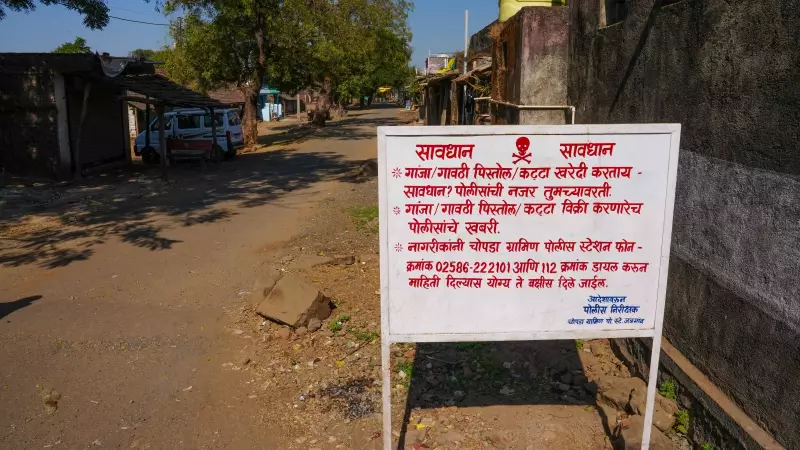
The notoriety of Umarti is such that a warning board now greets visitors. "Saavdhan. Are you purchasing country-made pistols? Beware. Police are watching you…," it reads. Ironically, this board stands not in MP's Umarti, but in a namesake village in Maharashtra's Jalgaon district. The two villages are connected by a small bridge over the River Aner on the state border, symbolizing the cross-border nature of this trade.
The raid followed a specific trail. Six minor boys detained from Pimpri-Chinchwad in Pune for a murder allegedly procured two pistols and cartridges from an Umarti dealer for Rs 50,000. This was not an isolated case. Pune police kept encountering Umarti's name during probes into gang wars and weapon seizures, prompting the large-scale action.
Inspector Kaveri Kamlakar, involved in multiple Umarti operations, revealed the scale and sophistication. "Not just desi kattas costing a few thousand rupees, we have recovered fine-quality pistols sold for up to Rs 1 lakh each," she said. The Madhya Pradesh Police is investigating potential links between Umarti's gunmakers and inter-state racketeering networks, especially after seizing over a thousand gun barrels in recent months.
The People of Umarti: Tradition and Aspiration
Umarti, with around 300 homes and 2,000 residents, is primarily home to the Sikligars – a Sikh sub-community historically involved in metalwork and weapon repair – along with Barela and Bhil tribal communities. The village's current reputation pains many residents.
Sarpanch Ramesh Tarole, from the Barela tribe, laments that the actions of a few tarnish the entire village. Villagers are quick to share alternative success stories: a Sikligar who serves as an Indian Army Commando, a 12-year-old budding cricketer in Mumbai. Rajpal Singh Juneja, whose brother is in the Army, emphasizes, "Many are into farming, some have other businesses, nothing to do with firearms."
Education is becoming a new focus. Teacher Nishan Singh Juneja points out that "over 200 Sikligar children study in English-medium schools." Former deputy sarpanch Attarsingh Barnala states, "Our children do not want to join the weapons trade. My son did an MBA… We look for the government’s support to improve our situation."

However, transitioning from a generations-old practice is challenging. Barwani District Collector Jayanti Singh admits that while efforts are ongoing to wean the Sikligars away from their traditional profession, "success is limited." The rudimentary home-based units are deceptively simple. A trained Sikligar can manufacture a pistol in just two to three days, using raw materials easily sourced from scrap and hardware shops, as explained by Narayan Rawal, in-charge of Warla police station.
The story of Umarti is a complex tapestry of crime, policing, and community identity. It highlights how localized industries can fuel national crime waves and the difficult path toward legal livelihoods when traditional skills are misdirected. As police vigilance increases, the future of 'USA' hangs in the balance between its notorious past and the aspirations of its next generation.