

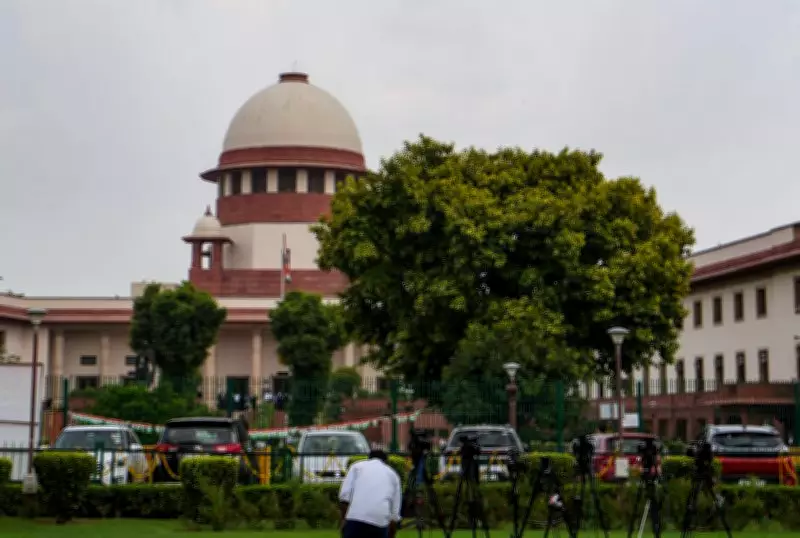
The Muslim side has moved the Supreme Court against the Madhya Pradesh High Court order that declared the Bhojshala complex in Dhar as a temple. The petition challenges the High Court's ruling, which had stirred a fresh controversy over the historical site. The Bhojshala complex, a medieval structure, has been a subject of dispute between Hindu and Muslim communities for decades. The High Court's decision came in response to a petition seeking the restoration of the site as a temple, claiming it was originally a Hindu temple dedicated to Goddess Vagdevi. The Muslim side argues that the complex has been used as a mosque for centuries and that the High Court overlooked historical evidence. The Supreme Court is expected to hear the matter soon, with both sides presenting their arguments. The case has garnered significant attention, as it involves religious sentiments and historical claims.
Background of the Dispute
The Bhojshala complex, located in Dhar district, is believed to have been built by Raja Bhoj in the 11th century. It has been a place of worship for both Hindus and Muslims, with Hindus claiming it as a temple and Muslims using it as a mosque. The Archaeological Survey of India (ASI) currently manages the site, allowing Hindus to pray on Tuesdays and Muslims on Fridays. The High Court's order to declare it a temple has intensified the legal and communal tensions.
High Court Ruling
In its March 2024 order, the Madhya Pradesh High Court ruled that the Bhojshala complex is a temple and directed the ASI to allow Hindus to worship there without restrictions. The court cited historical and archaeological evidence to support its decision, including inscriptions and architectural features indicative of a Hindu temple.

Muslim Side's Arguments
The Muslim side, represented by the Dhar Qazi and other community members, contends that the complex has been used as a mosque since the 14th century and that the High Court's ruling disregards the site's composite character. They argue that the order violates the Places of Worship Act, 1991, which maintains the religious character of places as they existed on August 15, 1947. The petition in the Supreme Court seeks a stay on the High Court's order and a fresh examination of the evidence.
Legal Implications
The case has broader implications for similar disputes across India, where religious sites are contested. The Supreme Court's decision could set a precedent for how historical claims are adjudicated. The matter also raises questions about the interpretation of the Places of Worship Act and the balance between religious freedom and historical preservation.
Next Steps
The Supreme Court is likely to issue notice to the Madhya Pradesh government and the ASI, seeking their responses. The court may also consider an interim arrangement to maintain peace at the site. Both sides have expressed willingness to abide by the court's decision, but tensions remain high in Dhar.






