

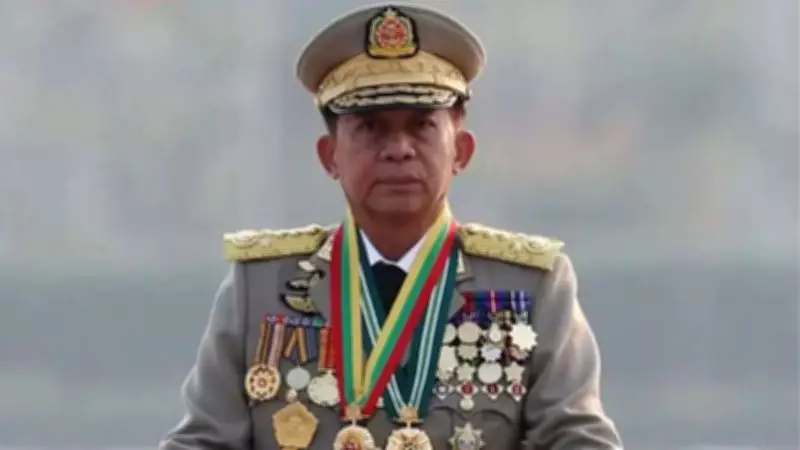
Myanmar's New President Outlines Priorities in First Parliamentary Address
Myanmar's newly sworn-in President Min Aung Hlaing delivered his inaugural address to parliament on Friday, acknowledging that his government faces "many challenges to overcome" while expressing a commitment to normalize relations with the Southeast Asian bloc ASEAN. The speech, which lasted less than 20 minutes, was attended by more than 50 foreign guests in the capital Naypyitaw.
Acknowledging the Path Forward
"Myanmar is now well on its way toward democracy, but the new government has a lot of challenges to overcome," Min Aung Hlaing stated during his address. He emphasized that the administration's core priorities are firmly rooted in advancing democracy and establishing lasting peace across the nation. The president's remarks come at a critical juncture for Myanmar, which has experienced significant turmoil in recent years.
Commitment to International Engagement
The former junta chief outlined his government's intention to strengthen Myanmar's position on the global stage. "We will enhance international relations and strive to restore normal relations with ASEAN," he declared. This statement marks a notable shift toward diplomatic outreach, particularly with the 11-member Association of Southeast Asian Nations.

The 2021 coup, led by Min Aung Hlaing, and the subsequent military crackdown prompted ASEAN to intervene, resulting in the bloc barring the junta leadership from attending its summits. The president's pledge to restore ties suggests a potential thaw in these strained relations, though it remains to be seen how ASEAN will respond given ongoing concerns about Myanmar's internal affairs.
Economic and Governance Roadmap
Min Aung Hlaing detailed a comprehensive plan for his administration, focusing on key areas such as spurring foreign investment, developing the agricultural sector, and formulating effective, long-term strategic policies. "The new government will implement a roadmap based on democracy and federalism," he affirmed, indicating a structured approach to governance that aims to address both political and economic dimensions.
Transition from Military to Civilian Leadership
Min Aung Hlaing's election as president by parliament a week ago formalizes his grip on political power in war-torn Myanmar, five years after he led the coup that plunged the nation into chaos. His carefully choreographed journey from top general to civilian president follows a recent election that was won in a landslide by an army-backed party.
However, this electoral process has been widely criticized by opponents and Western governments, who have derided it as a sham designed to perpetuate military rule behind a veneer of democracy. The president's inaugural address, while highlighting democratic aspirations, does little to assuage these criticisms, as many observers remain skeptical of the military's true intentions and commitment to genuine reform.
As Myanmar navigates this complex political landscape, the international community will be closely watching how Min Aung Hlaing's government addresses the myriad challenges it faces, from internal conflict and economic instability to rebuilding trust with regional partners like ASEAN.






