

Nagpur Family's Decade-Old Wounds Reopened by Supreme Court Euthanasia Decision
The Supreme Court's landmark ruling permitting passive euthanasia for comatose patient Harish Rana has stirred profound and painful memories for the Berry family residing in Gadikhana, central Nagpur. While a decade has passed since their own tragedy, the emotional scars remain vividly raw. The Berrys have expressed both admiration for the apex court's courageous decision and respect for the Rana family's fortitude in pursuing this difficult path.
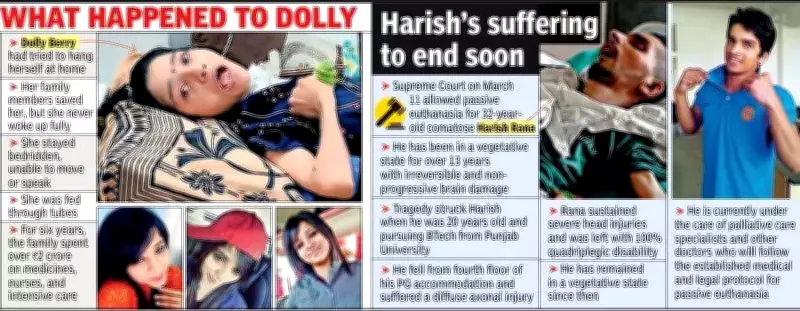
A Life Paused: The Tragic Story of Dolly Berry
The Berrys endured the heartbreaking loss of their daughter, Dolly, a vibrant 23-year-old choreographer and television anchor, following an agonizing six-and-a-half-year period during which she existed in a persistent vegetative state. Her case once ignited widespread protests, candlelight vigils, and intense media debates across central India.
In July 2016, after experiencing a miscarriage and the collapse of her love marriage, Dolly attempted to take her own life at home. Although her family intervened to save her, she never regained full consciousness. For the ensuing six years, Dolly remained completely bedridden, incapable of movement or speech, and dependent on feeding tubes for sustenance.

- Medical expenses exceeding ₹2 crore for medicines, specialized nursing care, and intensive treatment.
- Constant battles with severe bedsores, recurrent pneumonia, and persistent fevers.
- The emotional vacuum during festivals like Diwali, which felt hollow and empty despite Dolly's physical presence.
- A complete halt to normal family life, with no holidays or outings possible as someone always had to remain by her bedside.
Dolly's husband, who was out on bail after facing charges under IPC sections 315 (causing miscarriage without woman's consent) and 498A (cruelty), remained free while her family awaited justice. "As justice hangs in balance, it's 'tareek pe tareek' in court," a family member recounted, describing the endless postponements of legal proceedings. "Her family quietly prays for peace to finally reach Dolly's weary soul."
The Silent Passing and Unspoken Dilemma
Dolly passed away quietly in August 2022, bringing a somber end to her prolonged suffering. Her sister, Deepika, revealed that the family never pursued legal avenues for euthanasia during those difficult years. "We were scared. We thought it meant abandoning her. Relatives abroad suggested it, but we refused," she confessed, highlighting the moral and emotional complexities families face in such situations.
A Bittersweet Validation from the Supreme Court
Now, witnessing the Rana family in Delhi secure Supreme Court permission to end Harish Rana's suffering through passive euthanasia, the Berrys experience a mixture of profound sadness and quiet pride. "We couldn't do it for Dolly. But the Ranas had the courage. We salute them and the Supreme Court," Deepika stated emotionally.
Every news update regarding Harish Rana's case brings fresh tears to Dolly's mother, Neelam. She often sits reminiscing about her daughter's energetic dance performances, wiping away tears as memories flood back. "We tried everything. We kept her with us till the end," Deepika whispered, underscoring their unwavering dedication.
A Call for Legal Reform and Dignified Choices
The Berry family now advocates for significant changes to India's legal framework concerning end-of-life care. "People in a vegetative state hang by a thread, neither alive nor dead. It's cruel for the family. No joy, no peace. Let us decide with dignity," Deepika urged, voicing a plea shared by many families in similar circumstances.
The Berrys extend their gratitude to the Rana family for what they describe as "freeing a soul" and express hope that others might be spared their prolonged anguish. They remember Dolly as someone brimming with life—dancing, hosting television shows, and dreaming big dreams. "One wrong choice changed everything," Deepika reflected. "Today, her story reminds us that love isn't always enough. Sometimes, letting go is the kindest and most compassionate act."






