Nagpur High Court Bench Converts TOI Report on Traffic Signal Failures into Suo Motu PIL
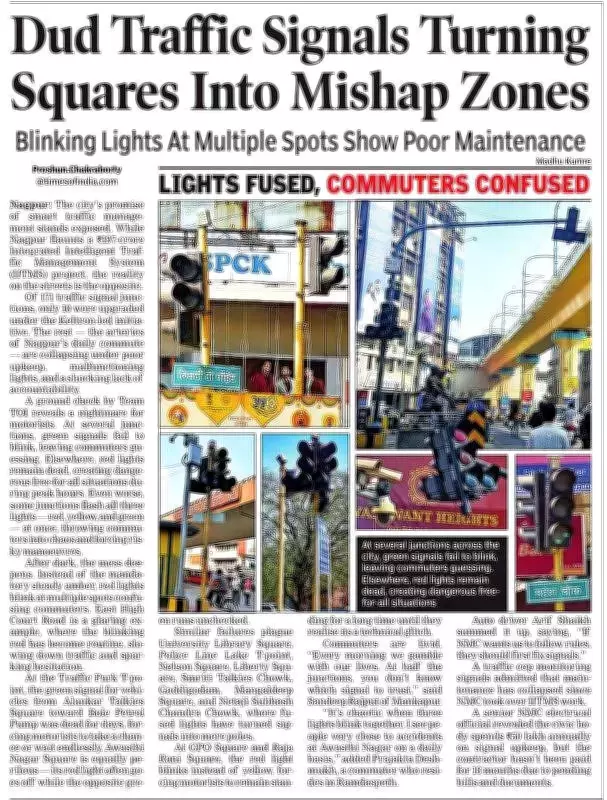
Taking serious cognisance of a Times of India report titled "Dud traffic signals turning squares into mishap zones" published on December 3, 2025, the Nagpur bench of the Bombay High Court on Friday converted the news report into a suo motu public interest litigation (PIL). The court observed that the issues highlighted in the investigative piece were of grave public importance and directly impact road safety for all citizens.
Systemic Failures in Nagpur's Traffic Management System Exposed
The division bench comprising Justice Anil Kilor and Justice Raj Wakode noted that the TOI article had underlined the systemic failure of Nagpur's Integrated Intelligent Traffic Management System (IITMS). The High Court recorded that while the city has 171 traffic signal junctions, only 10 had been upgraded under the Keltron-led initiative, leaving a vast majority of intersections operating with outdated or malfunctioning infrastructure.
The bench made a strong observation that Nagpur's traffic signal system was effectively "collapsing" due to multiple factors including:

- Poor maintenance practices
- Frequent signal failures
- A glaring lack of accountability among responsible agencies
Court Appoints Amicus Curiae and Directs Cooperation
Considering the seriousness of the issue, the High Court appointed advocate Utkarsh Khobragade as amicus curiae to assist the court in this matter. The bench further directed all concerned agencies, including:
- Civic authorities
- Traffic police department
- Implementing agencies associated with IITMS
to extend full cooperation to the amicus curiae. The court made it clear that comprehensive assistance would be required to:
- Assess the current status of traffic signals across Nagpur
- Identify lapses in implementation and maintenance
- Suggest appropriate corrective measures
Ground Reality Shows Little Improvement Despite Previous Measures
Even on Friday, a TOI visit to several major junctions across Nagpur revealed little improvement on the ground. Traffic signals continued to malfunction at key intersections including:
- Traffic Park Square
- University Library Square
- Pratap Nagar Square
- NEERI T-Point
- Ajni Square
Signals were found functioning intermittently—working at times and going haywire at others—leaving commuters confused and exposed to serious risks on a daily basis.
Broader Implications for Smart City Initiatives
The court observed that the issues raised in the TOI report affect public safety at large, underlining that the failure of basic traffic regulation mechanisms defeats the very purpose of smart city initiatives and intelligent traffic systems. The bench noted that malfunctioning signals, blinking lights, and defunct junctions have turned major squares into confusion zones, increasing the risk of accidents and endangering commuters regularly.
Earlier, TOI had reported that the traffic police had constituted a dedicated squad to address such issues and undertake emergency repair work at malfunctioning junctions. However, despite having a dedicated private firm, the Nagpur Municipal Corporation's electrical department hasn't ensured that old traffic signals remain functional, while on the other hand, the implementation of IITMS continues at a snail's pace, further compounding risks for city commuters.
Judicial Scrutiny and Future Proceedings
The court directed the registry to complete procedural formalities and listed the matter for further hearing on February 16, signalling that it expects accountability and concrete action to address the issue. With judicial scrutiny now firmly in place, the case is expected to bring renewed focus on:
- Civic negligence in maintaining public infrastructure
- Contractor accountability in implementation projects
- The fate of Nagpur's much-publicised IITMS project
The suo motu PIL represents a significant judicial intervention in what the court has deemed a matter of urgent public safety requiring immediate attention and systemic correction.