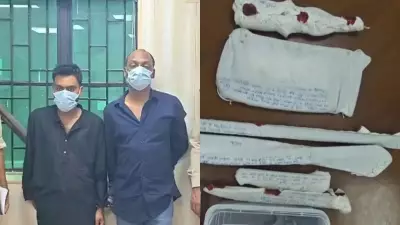
Nagpur Terror Investigation: Principal's Garden Suspected as Deliberate Explosives Dead-Drop
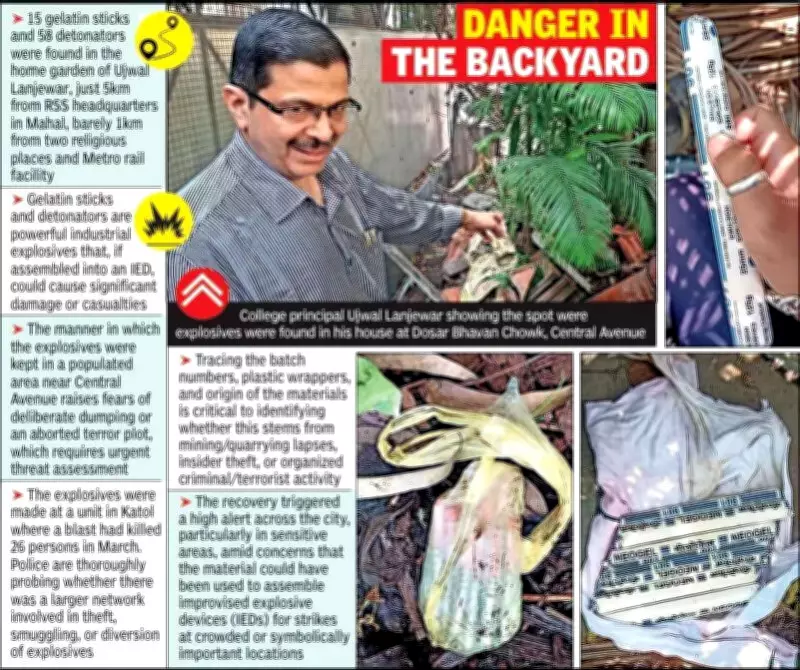
In a chilling development, investigators in Nagpur suspect that the quiet residential garden of college principal Ujwal Lanjewar at Dosar Bhavan Chowk on Central Avenue was intentionally selected as a temporary pick-up point or classic dead-drop by suspected terror operatives. This location was allegedly used for short-distance courier movement of explosive material within the city, according to emerging details from the ongoing high-stakes probe.
Strategic Location Chosen to Evade Surveillance
The explosives reportedly lay unnoticed in the garden for several days before discovery. An official involved in the investigation revealed that the place was deliberately chosen with the knowledge that it was not within CCTV coverage, a factor that is significantly hindering the probe. Sources from the city police confirmed that information has been formally sought from the Petroleum and Explosives Safety Organisation (PESO) regarding comprehensive details of the seized material.
This request includes manufacturing dates, stock records, despatch documentation, and other critical administrative trails that could help trace the origin and movement of the dangerous cache.

Garden's Proximity to Sensitive Sites Raises Alarms
Lanjewar's garden is situated in a bustling residential-cum-commercial zone, presenting a concerning geographical profile. The location is within 5 kilometers of the RSS headquarters and merely 1.5 kilometers from other important religious places of different communities. A MahaMetro facility is also in the immediate vicinity, adding to the area's strategic significance.
Investigative sources indicated that suspected terror operatives may have found this location exceptionally convenient to minimize travel time and operational exposure while moving the material toward potential targets. Gaps in the iron fencing of the garden enclosure made it notably easier to discreetly deposit and retrieve the explosives, according to officials familiar with the site inspection.
Details of the Seized Explosive Cache
The recovered materials included:
- 15 gelatin sticks (live cartridges)
- 58 detonators, including eight with connectors
These items were concealed in three plastic bags and weighed approximately 2 kilograms in total. A senior official noted, "The wire connectors of the detonators were also severed, which made them dysfunctional. But we are not ruling out foul play or intentional sabotage of evidence."
City on High Alert Amid Terror Concerns
The recovery has triggered a heightened security alert across Nagpur, with particular focus on sensitive areas. Authorities express serious concerns that the material could have been intended to assemble improvised explosive devices (IEDs) for potential strikes at crowded locations or symbolically important sites.
Intelligence agencies and anti-terror squads are actively probing whether this cache was meant to "trigger havoc" in Nagpur. The investigation involves multiple central and state agencies working to unravel any possible connections to terror modules. No arrests have been made so far, but the probe continues intensively to determine if this cache represents part of a larger network sourcing industrial explosives for potential misuse.
Manufacturing Origin and Distribution Trail
The gelatin sticks and detonators were manufactured at a Katol-based ammunition manufacturing company, the same facility where a devastating blast killed 26 persons and injured several others in March this year. Police have identified one of the distributors associated with this company.
A team led by Zonal DCP Rahul Madane is currently questioning this distributor to establish critical details: who received the explosives, when the handover occurred, and the exact supply chain that brought these materials to Nagpur.
Comprehensive Investigative Efforts Underway
Teams from Ganeshpeth police station, along with other specialized agencies, are conducting multiple parallel investigations:

- Scanning available CCTV footage from the surrounding area despite coverage gaps
- Conducting multiple rounds of interrogation to collect actionable clues
- Coordinating with explosive experts and forensic teams
A formal case has been registered against unidentified persons under relevant sections of the Explosives Act and the Bharatiya Nyaya Sanhita (BNS), reflecting the seriousness with which authorities are treating this incident.
Urban Terror Tactics Revealed
An official involved in the investigation highlighted the broader implications: "The incident underlines how urban terror operatives can exploit everyday residential spaces for modular, relay-style movement of explosives. This approach significantly reduces risk to core members while maintaining operational capability."
Gelatin sticks, commonly used in legitimate mining and quarrying operations, become extremely dangerous when diverted for criminal or terror purposes. Their destructive potential escalates dramatically when paired with detonators capable of triggering controlled blasts, as noted by explosive experts consulted in this case.
The investigation remains active and expansive as authorities work to piece together the complete picture of this alarming security breach in the heart of Nagpur.