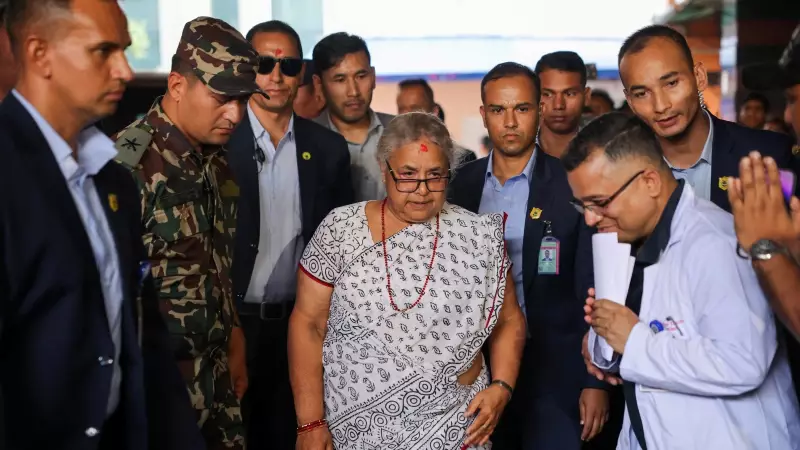
Months after widespread youth-led demonstrations rocked Nepal's political landscape, the country's Supreme Court has taken a significant step. The apex court has issued a show-cause notice to the interim government led by former Chief Justice Sushila Karki, demanding a formal explanation for its formation and actions.
The Court's Directive and Legal Challenge
The judicial order came in response to a writ petition filed at the Supreme Court. The petition challenged the very legality of appointing Sushila Karki, who previously served as the Chief Justice of Nepal, to head an interim administration. The court's notice requires the government to provide a reasoned justification for its establishment.
This legal move underscores the ongoing constitutional and political tensions that have persisted since the massive Gen-Z protests earlier this year. Those protests, primarily driven by young citizens, expressed deep frustration with the established political class and demanded systemic reforms.
Background: From Protests to an Interim Setup
The sequence of events is critical to understanding the current legal impasse. Following the intense pressure from the streets, major political parties reached an agreement to form a new interim government. This was intended as a transitional arrangement to steer the country towards stability.
As part of this political compromise, Sushila Karki was appointed as the head of this interim government. Her selection was likely seen as a move to bring a figure perceived as being above the fray of day-to-day politics. However, this appointment itself has now become a subject of legal scrutiny, questioning the process and its constitutional validity.
Implications and the Road Ahead
The Supreme Court's intervention places the interim government in a precarious position. It must now legally defend its mandate and the process that led to its creation. This development adds another layer of complexity to Nepal's already challenging political transition.
Analysts suggest that the court's notice signals the judiciary's active role in examining political agreements against the framework of the constitution. The response from Sushila Karki's government and the subsequent court hearing will be closely watched, as they could set important precedents for governance and political settlements in Nepal.
The core issue remains balancing the public mandate for change, as seen in the Gen-Z protests, with strict adherence to constitutional and legal procedures. How this case resolves could significantly impact the short-term political direction of the country and the public's trust in its institutions.