Israeli Prime Minister Suggests Iranian Leader May Be Dead After Major Strikes
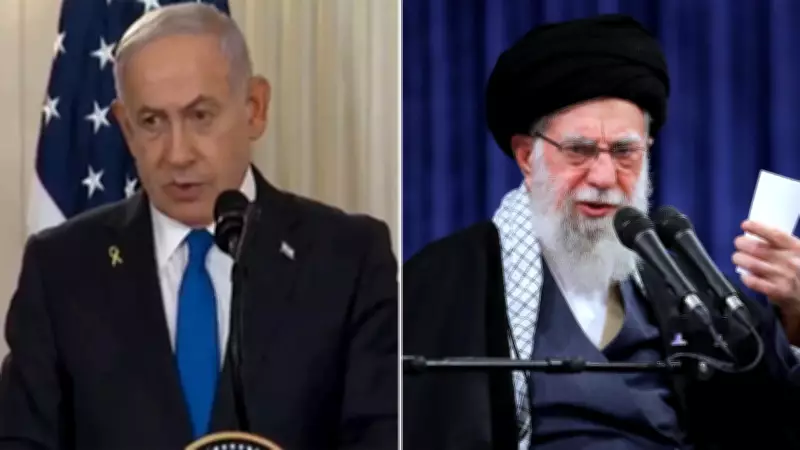
Israeli Prime Minister Benjamin Netanyahu has made a dramatic claim that there are "growing signs that this dictator is gone", strongly suggesting that Iran's Supreme Leader Ali Khamenei may have been killed in sweeping joint US-Israeli military strikes targeting Tehran. In a nationally televised address to the Israeli people, Netanyahu revealed that one of the primary targets was Khamenei's compound in the Iranian capital, hours after multiple explosions were reported near the offices of the 86-year-old cleric.
Direct Attack on Iranian Leadership
The Israeli leader stated that the operation had successfully eliminated numerous high-value targets, including senior commanders in the Islamic Revolutionary Guard Corps (IRGC), high-ranking regime officials, and leading nuclear scientists. "This morning we eliminated IRGC commanders, senior Iranian regime officials, senior nuclear officials," Netanyahu declared, adding that "in the coming days, we will hit thousands of targets of the terror regime."
The joint assault, described by US President Donald Trump as a "massive operation", represents one of the most direct attacks on Iran's leadership structure in decades. Trump emphasized that the primary objective was to destroy Iran's military capabilities and eliminate the threat of the nation acquiring nuclear weapons. Approximately twelve hours after the strikes commenced, US military officials reported no American casualties despite what they characterized as "hundreds of Iranian missile and drone attacks" in retaliation.

Iranian Retaliation and Casualty Reports
Iranian state media, citing the Red Crescent organization, reported that at least 201 people had been killed and more than 700 injured in the initial strikes. Tehran responded with significant missile and drone attacks targeting both Israel and US military installations across the Middle East, including facilities in Bahrain, Kuwait, and Qatar. The exchanges of fire continued well into the night, creating widespread regional instability.
In contrast to Netanyahu's claims, Iran's foreign minister Abbas Araghchi told NBC News that both Supreme Leader Khamenei and President Masoud Pezeshkian were alive "as far as I know", condemning the attack as "unprovoked, illegal and absolutely illegitimate." This conflicting information has created uncertainty about the actual status of Iran's leadership.
Netanyahu's Broader Strategic Vision
Netanyahu framed the military campaign as a potential turning point in regional dynamics, asserting that Israel had initiated warfare to "fundamentally change" the situation where Iran was rapidly approaching nuclear weapons capability. The Israeli prime minister vowed that operations would continue "as long as necessary" and emphasized that "stamina is necessary" for this prolonged conflict.
In an unusual direct appeal to the Iranian populace, Netanyahu urged citizens to seize what he called a "once in a generation chance" to overthrow their government. "Take to the streets en masse," he encouraged. "It is high time you come together and unite for a historic mission."
The Israeli leader concluded by thanking President Trump for his "historic leadership" and expressed optimism that the campaign would ultimately "lead to peace, true peace"—even as the entire Middle East region braces for further escalation and potential widespread conflict in the coming days and weeks.