

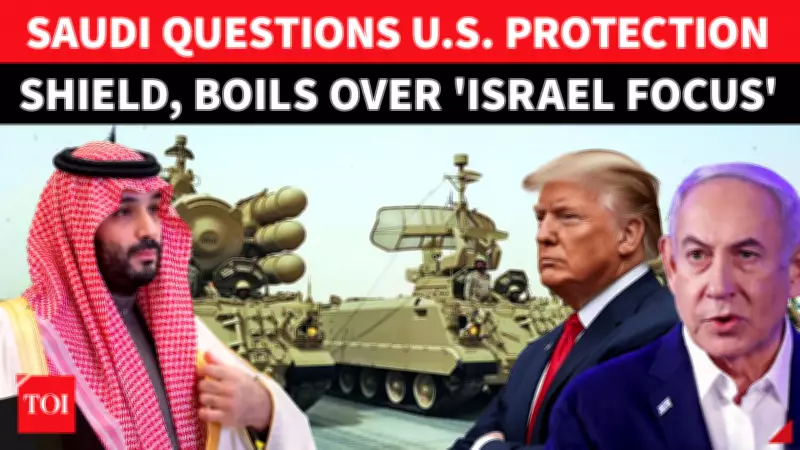
Gulf Nations Voice Frustration Over US Priorities in Iran Conflict
Amid escalating regional hostilities, a senior Saudi official has reportedly levied a significant charge against the United States, accusing it of prioritizing Israel's security while leaving Gulf Cooperation Council (GCC) partners exposed to increasing Iranian aggression. This accusation underscores a growing rift as missile and drone attacks from Iran intensify, threatening critical American military infrastructure throughout the Gulf region.
Allegations of Neglect and Strategic Concerns
The official's statement, as reported, claims that "Trump's priority is Israel...", suggesting a perceived imbalance in US defense commitments. This sentiment emerges during a period of heightened tensions involving Iran and Israel, with Gulf states caught in a precarious position. Despite urging for restraint, these nations find themselves on the front lines, actively deploying air defense systems to intercept incoming threats from Iran.
The core of the frustration lies in the vulnerability of key US military installations that are strategically vital yet potentially within range of Iranian strikes. Notably, these include:

- Al Udeid Air Base in Qatar, a central hub for US air operations in the Middle East.
- The US Navy's Fifth Fleet headquarters in Bahrain, a critical maritime command center.
These facilities represent significant American military power, yet Gulf officials express concern that their defense is being secondary to the protection of Israeli interests.
Regional Implications and Escalating Threats
The situation highlights a complex geopolitical landscape where Gulf states, traditionally aligned with the US, feel increasingly isolated. The Iranian regime's stepped-up attacks, including missile bombardments and drone strikes, have created a volatile environment. Gulf nations are not only intercepting threats but also managing the political fallout, advocating for de-escalation even as their own security is compromised.
This development points to a broader strategic dilemma for US foreign policy in the Middle East. Balancing support for Israel with the security assurances promised to Gulf allies has become a contentious issue, potentially undermining long-standing partnerships. The accusations from Saudi Arabia signal a possible shift in regional alliances and a call for a more equitable distribution of US military support and diplomatic attention.
As the conflict persists, the stability of the entire Gulf region hangs in the balance, with economic and security repercussions that could extend globally. The need for a coherent and inclusive US strategy is now more pressing than ever to address the legitimate security concerns of all its partners in the face of Iranian aggression.






