The proposed design for the new Bombay High Court building in Bandra has sparked significant criticism from legal experts and architects, with a former judge leading the charge by labelling it 'hostile' and warning that ordinary litigants will bear the brunt of its flaws.
A 'Fundamentally Undemocratic' Design?
Speaking at an exhibition and discussion of the architectural proposals on Tuesday, former Bombay High Court judge Justice Gautam Patel delivered a scathing assessment of the winning design by renowned architect Hafeez Contractor. He described the planned complex as 'fundamentally undemocratic' and a 'monument' rather than an efficient, climate-resilient building.
"Not even a token nod was given to the importance of the litigant and the citizen in the development of this building," Justice Patel asserted. He emphasised that the design represents an 'inversion of the pyramid,' where the litigant, who should be the top priority, appears to have been overlooked in favour of grandeur.
Core Concerns: Accessibility and Neglect of Heritage
The critique centres on several key issues that stakeholders believe will negatively impact the court's primary users. Justice Patel highlighted the lack of adequate waiting spaces for litigants, a problem already evident in the current heritage premises in South Mumbai's Fort area. He stressed the need for designs that incorporate spaces for litigants to wait comfortably and consult with their lawyers, avoiding vast, intimidating distances within the complex.
"Ideally, the courtroom should have quiet, a certain type of lighting, line of sight, as much natural light as possible as well as accessibility for litigants," the former judge elaborated. Mustansir Dalvi, a former professor at the Sir J.J. School of Architecture, echoed these concerns, noting that grand staircases meant to create 'shock and awe' are often neither disabled-friendly nor litigant-friendly, instead projecting an image of 'grandeur and aristocracy.'
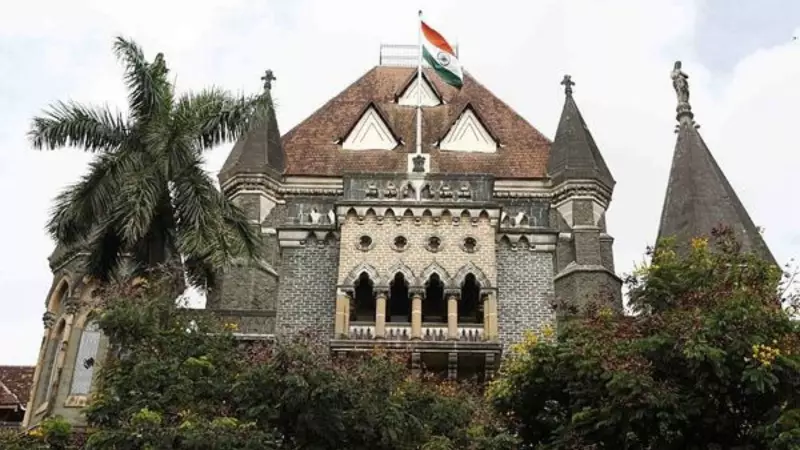
Furthermore, Patel raised alarms about the potential neglect of the current iconic high court building in the Fort area. He suggested alternative uses for the heritage structure, such as housing arbitration and mediation centres or digitisation facilities, ensuring its preservation.
The Backdrop: A New Complex for Growing Needs
The controversy follows the laying of the foundation stone for the new complex a month ago. With the existing heritage premises proving insufficient, the Public Works Department (PWD) issued a tender on October 31 for the construction of the 'New Integrated High Court Complex' at the Bandra Government Colony. The selected design, which emerged from a competition, proposes a sprawling complex of over 50 lakh square feet, featuring 75 advanced courtrooms and wide corridors.
The discussion, organised by the Mumbai Architects Collective, gains added significance in light of recent remarks by Chief Justice of India Bhushan R Gavai. In November, Justice Gavai stated there should be "no extravagance" in the new building, reminding all that "judges are no more feudal lords." The current wave of criticism suggests that the selected design may not align with this vision of a people-centric and functional judiciary.