

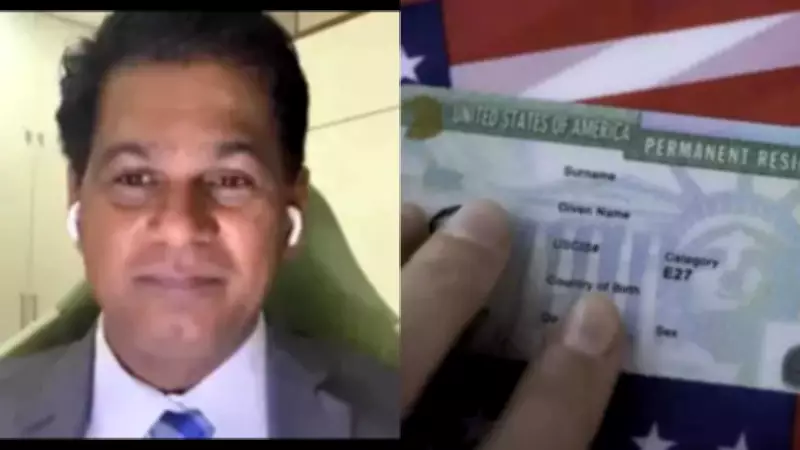
A new rule announced by the US Citizenship and Immigration Services (USCIS) has sent shockwaves through the immigrant community, affecting approximately 1.2 million legal immigrants who have been waiting for years to become permanent residents. The rule suggests that applicants can no longer wait for their Green Card while staying in the US; instead, they must return to their country of origin and apply for an immigrant visa from there.
Legal Experts Seek Clarity
Experts are awaiting further clarification on how the USCIS will implement this new policy. Many have indicated that the rule is likely to be challenged in court, as it appears to contradict existing laws. Indian-origin immigration attorney Rahul Reddy explained that while the rules and laws have not changed, the way Green Card applications are judged has shifted significantly.
What the New USCIS Rule Says
The USCIS stated that individuals often come to the US on temporary visas and then apply for a change of status to become permanent residents. During the waiting period, they continue to stay in the US. The new rule aims to stop this practice, requiring those who wish to become permanent residents to return to their home country and apply for an immigrant visa there.

Key Changes in Policy
For decades, visa holders who entered the US legally and maintained their status could apply for a Green Card through 'adjustment of status'. According to Reddy, the previous understanding was that if applicants followed the rules, kept their status, obtained I-140 approval, and waited for their priority date, the Green Card approval was essentially guaranteed. However, the new memo changes this by emphasizing that approving a Green Card from within the US is a favor, not a right. The memo encourages officers to use their discretion to deny applications even if the applicant qualifies.
The most concerning aspect for many is how the memo views individuals on work visas like H-1B, L-1, or O-1. The memo suggests that the government expects these individuals to eventually return home, not stay in the US. Staying to obtain a Green Card, rather than returning to the home country and applying at a US consulate, is now viewed negatively. Although the memo acknowledges that H-1B and L-1 visas allow for 'dual intent', it states that this allowance alone is insufficient for approval.
Advice for H-1B Visa Holders Seeking Green Cards
Reddy advises those who have already filed a Green Card application to consult their lawyer and strengthen their case before the USCIS forces the issue. For those considering filing, the decision is more difficult, as they may eventually need to return to their home country and apply from there, a process that is slow and risky.
Impact on I-140 Approved Applicants
Many questions remain unanswered regarding the new memo. Some experts interpret that the rule applies only to the 'Adjustment of Status' part of the Green Card process, which occurs when the priority date becomes current and the applicant is ready to file Form I-485. For this step, the applicant may need to leave the US. However, those who have only filed I-140 (a petition for a Green Card) may not be required to leave immediately. It typically takes years for priority dates to become current for applicants from India and China, so these two countries may not see an immediate impact. However, the USCIS memo did not clarify these specifics.






