

NIA Court Frames Charges in Chandigarh's Sector 10 Grenade Attack Case
The Special NIA Court in Chandigarh has formally framed charges in the high-profile Sector 10 grenade attack case, marking a significant step forward in the legal proceedings. The trial is scheduled to commence on April 2, 2026, as the judicial process moves into its next critical phase.
Details of the Charges and Legal Framework
The accused individuals are facing a series of serious charges under multiple legal statutes. Specifically, they have been charged under Sections 109, 351 (2), 333, and 61 of the Bharatiya Nyaya Sanhita (BNS). Additionally, the charges include Sections 3, 4, 5, and 6 of the Explosive Substance Act of 1908, as well as Sections 13 and 16 of the Unlawful Activities Prevention Act of 1967. This comprehensive legal action underscores the gravity of the offenses, which are linked to terrorism and explosive-related crimes.
Background of the Grenade Attack Incident
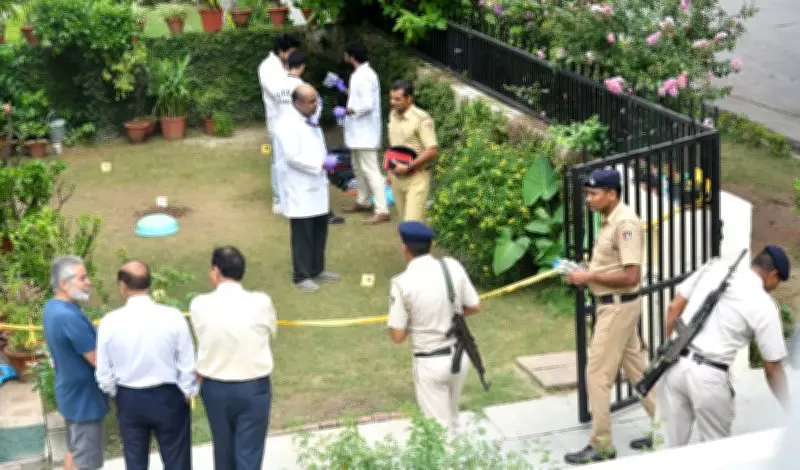
The case originated from a grenade attack that occurred on September 11, 2024, when a hand grenade was hurled at a residence in Sector 10-D of Chandigarh. The initial investigation was conducted by the UT police, but due to the severity and national security implications, the case was subsequently transferred to the National Investigation Agency (NIA) for a more thorough probe.

According to the NIA's findings, the accused, identified as Rohan Masih and Vishal, allegedly carried out the attack at the behest of US-based gangster-turned-terrorist Harpreet Singh, also known as Happy Passia, and Pakistan-based terrorist Harwinder Singh Rinda. The grenade was launched from an auto-rickshaw, targeting the home of a retired principal and his wife, who narrowly escaped injury as they were sitting in the verandah just minutes before the explosion. The blast resulted in significant damage to windows and garden pots at the property.
Investigation and Arrests in the Case
Following the attack, Happy Passia allegedly claimed responsibility, stating that the target was a retired Superintendent of Police. The police were able to arrest the accused based on evidence from CCTV footage, which played a crucial role in identifying the perpetrators.
The NIA has asserted that this attack was part of a broader conspiracy aimed at spreading fear within society, specifically targeting a retired Punjab Police officer. Their investigation revealed that Passia was instrumental in recruitment, funding, and supplying weapons and explosives to operatives based in India.
In March of the previous year, chargesheets were filed against Rinda and Passia as absconders, along with the two arrested accused, Rohan and Vishal. During the course of the investigation, the NIA identified Abhijot Singh, alias Gopi, as a co-conspirator and subsequently arrested him. It was discovered that Abhijot had traveled to Armenia in December 2023, where he established contact with Passia's terror node, Shamsher Shera.
Shera recruited Abhijot into Passia's gang, and upon his return to India, Abhijot conducted reconnaissance of the target in July 2024. Along with Rohan, he attempted to assassinate the retired officer in August 2024. Abhijot received funds from foreign-based handlers associated with the Babbar Khalsa International (BKI) for this operation.
In September 2024, Rohan and Vishal executed the grenade attack. Abhijot was arrested in April of the following year and has been charged in a supplementary chargesheet filed before the Special NIA Court, further expanding the scope of the legal action against those involved in this terror plot.






