NIA Assumes Control of Rajasthan's Record Illegal Explosives Investigation
The National Investigation Agency (NIA) officially took charge of the investigation into Rajasthan's largest-ever seizure of illegal explosives on Friday. This development follows the Nagaur police's formal handover of all case files, documents, and critical evidence to the central agency. The transfer was executed in strict compliance with a February 2 order issued by the Union Ministry of Home Affairs, marking a significant escalation in the handling of this high-stakes case.
Unprecedented Seizure in Nagaur District
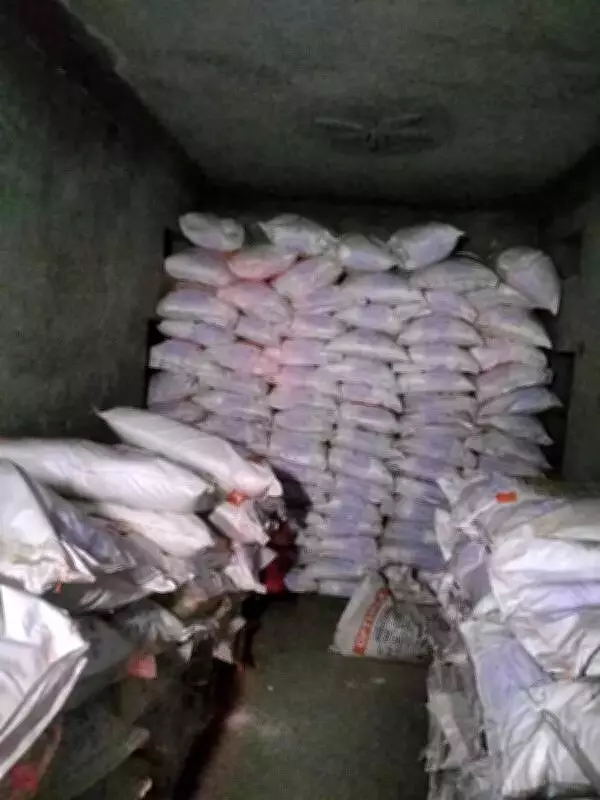
The case centers on the dramatic recovery of nearly 10,000 kilograms of explosives from Harsaur village, located within the jurisdiction of the Thawla police station in Nagaur district. According to official sources, the sheer magnitude and grave seriousness of this seizure—which stands as the most substantial illegal explosives haul ever recorded in Rajasthan—prompted the Home Ministry to decisively entrust the entire probe to the specialized counter-terrorism and national security agency, the NIA.
Police Raid and Subsequent Arrests
Nagaur Superintendent of Police, Mridul Kachhawa, provided detailed insights into the operation. "On January 24, our police teams conducted a targeted raid at a farmhouse owned by the primary accused, Suleman Khan," Kachhawa stated. "The operation resulted in the seizure of approximately 10,000 kg of ammonium nitrate, accompanied by a substantial quantity of detonators and blasting wires. Khan was apprehended at the scene."
Following Khan's arrest and subsequent interrogation, a dedicated Special Investigation Team (SIT) expanded the operation, leading to the arrest of four additional individuals identified as suppliers of the explosives from various locations. All five accused have been remanded to judicial custody after their police remand period concluded. Authorities have also named approximately six other individuals in connection with the case, with further legal action anticipated.
Illicit Supply Chain and Prior Criminal Links
During preliminary investigations, the accused allegedly confessed that the explosive materials were sourced from large, licensed storage facilities, commonly referred to as magazines. These materials were then illicitly supplied to smaller, unregulated units. Officials indicate this diversion is frequently linked to illegal mining operations, a persistent issue in the region. The ammonium nitrate and associated components, including wiring, were reportedly transported in bulk across multiple locations.
Police records reveal that Suleman Khan has multiple prior cases registered against him concerning illegal explosives and has a history of involvement in illegal mining activities, underscoring the organized nature of the operation.
Central Agency Coordination and Future Proceedings
SP Kachhawa emphasized that central agencies, including the NIA and the Intelligence Bureau (IB), were actively involved from the initial stages of the investigation. Critical intelligence inputs were shared collaboratively. "All further investigation and subsequent legal proceedings will now be exclusively conducted by the NIA," Kachhawa confirmed. "We have formally handed over all case-related files and documents to the NIA, ensuring a seamless transition."
The NIA's takeover signifies the national security implications of the case, reflecting the government's intensified focus on curbing the illegal trade and diversion of explosives, which pose severe threats to public safety and national integrity.