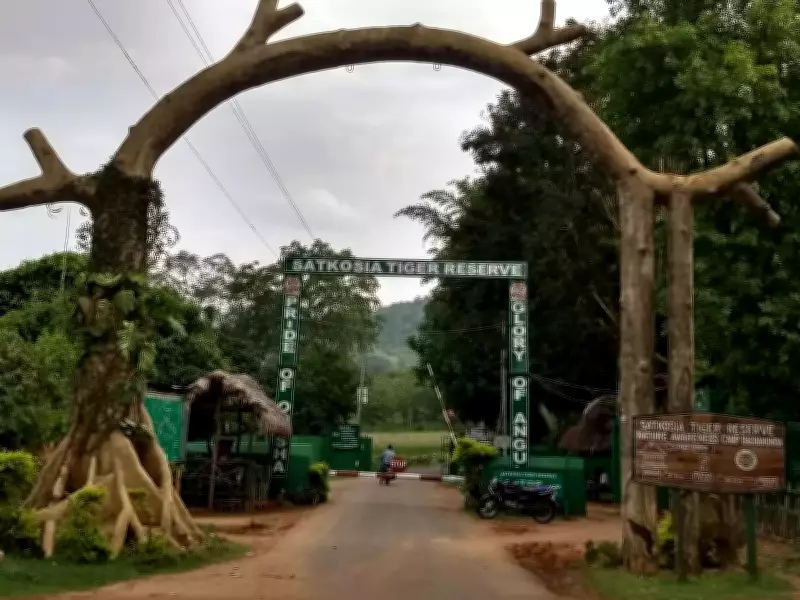
Odisha Rights Commission Orders High-Level Probe Into Tiger Reserve Relocation Irregularities
The Odisha Human Rights Commission has issued a strong directive, recommending the immediate formation of a high-level, multi-department inquiry committee to investigate widespread irregularities in the relocation of villages from the Satkosia Tiger Reserve. The commission has sharply criticized the state government for what it describes as "serious procedural infirmities" that have violated both human rights and statutory safeguards.
Systematic Violations Uncovered
In a detailed order passed on February 9, the commission highlighted multiple violations during the relocation process that has affected more than 650 families from villages including Bhurukundi, Asanbahal, Kataranga, Tuluka, Tikarapada, and Gopalpur. The panel found that the administration consistently bypassed established norms and mandatory processes, creating what petitioners described as "severe hardship" for displaced communities.
The commission identified several critical failures:

- Absence of valid Gram Sabha consent obtained through free and informed processes
- Non-settlement of forest rights under the Forest Rights Act before relocation
- Arbitrary exclusion of legitimate beneficiaries from compensation schemes
- Conduct of Gram Sabha meetings without proper notice or required quorum
Procedural Failures and Rights Violations
After examining official records, notifications, and testimonies from affected villagers and officials, the commission concluded that the relocation process suffered from fundamental flaws. "In several cases, Forest Rights Act rights were not recognized or settled before relocation, making any consent legally invalid," the order stated.
The panel noted that many Gram Sabha meetings were either not held at all, convened without proper notice, or conducted without the required quorum—circumstances that "do not inspire confidence" about the voluntariness of the relocation process.
Transparency and Compensation Issues
The commission flagged significant transparency problems in beneficiary enumeration, citing altered lists that were not publicly disclosed. This lack of transparency led to wrongful exclusion of married daughters, persons with disabilities, and long-term residents, while some ineligible persons were included without proper verification.
Compensation distribution presented another major concern. The commission found that payments were often released without scientific valuation of houses, land, trees, and livelihood assets, causing "grave hardship" to displaced families who received inadequate compensation for their losses.
Commission's Recommendations and Directives
Terming these lapses as violations of human rights and statutory safeguards, the commission recommended constituting a high-level committee comprising senior officials from the forest, ST & SC development, revenue, and law departments, along with an independent expert in wildlife law and rehabilitation policy.
The inquiry committee will have several critical responsibilities:
- Review village-wise violations of relocation norms and procedures
- Verify beneficiary lists to ensure proper inclusion of all eligible families
- Assess compensation gaps and recommend appropriate remedial measures
- Suggest disciplinary or criminal action against responsible officers
The commission has directed that this committee be formed within four weeks and complete its investigation promptly.
Immediate Restrictions on Further Relocation
Until the inquiry is completed, the Odisha Human Rights Commission has barred any further relocation from buffer, fringe, or ringed-out villages of Satkosia Tiger Reserve. The commission specified that future relocations can only proceed after:

- Forest Rights Act rights are fully settled for affected communities
- Valid Gram Sabha resolutions are passed with proper quorum
- The forest and environment department provides formal approval for the process
The relocation process, which began in 2017, has seen natives of five villages fully relocated between 2017 and 2025, while the process continues in two other villages. The commission's intervention comes in response to petitions from residents who alleged coercion, forgery, unfair exclusion, and severe hardship during the relocation drive in recent years.