Orissa High Court Voices Concern Over Tehsildars' Unauthorized Sand Mining Orders
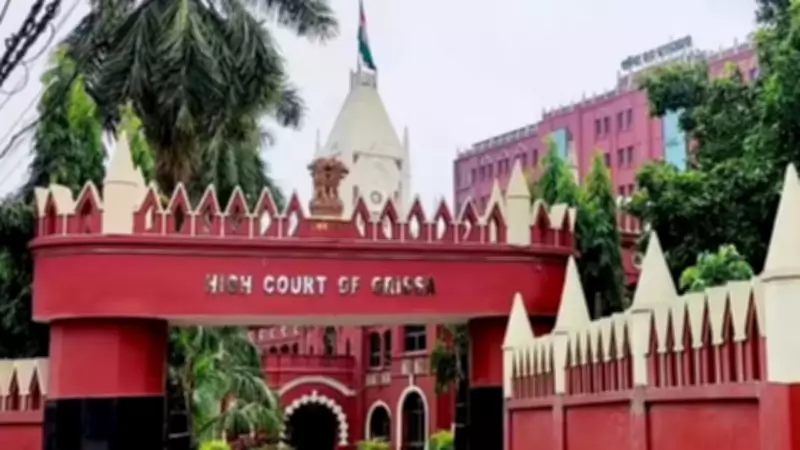
The Orissa High Court has raised significant alarm regarding the surge in legal disputes originating from orders issued by tehsildars concerning sand 'sairat' (mining) sources. This concern persists despite clear amendments to the state's mining regulations enacted in 2022. A division bench comprising Chief Justice Harish Tandon and Justice M S Raman articulated this apprehension on February 18 while overturning an order from the tehsildar of Badasahi in Mayurbhanj district.
Quashing of Unauthorized Order Highlights Jurisdictional Shift
The bench decisively nullified the tehsildar's May 2023 order, which had cancelled a sand auction process. The court firmly held that the officer lacked the requisite jurisdiction following the 2022 amendment to the Odisha Minor Minerals Concession Rules. "The spate of litigations are exploding the dockets of this court when the tehsildar of the respective jurisdictions are passing an order in relation to sand sairat sources after an amendment has been brought," the bench observed.
This amendment, introduced via a notification dated December 27, 2022—the Odisha Minor Minerals (Second Amendment) Rules, 2022—redefined the term 'authorised officer' to explicitly mean the director of mines and geology or any officer duly authorized by the government in writing for this specific purpose.

Legal Framework and Its Implications
The court meticulously noted that the amendment to the Odisha Minor Mineral Concession Rules, 2016, officially came into effect on December 28, 2022, the date of its publication in the official gazette. This legislative change effectively transferred all powers relating to sand sairat sources and quarry leases from tehsildars to the mining department. The bench elaborated, "The moment the amended Rules has taken away the jurisdiction from the tehsildar and vested it upon the mining officer, any order or a decision taken by the tehsildar is per se illegal and/or a nullity for want of jurisdiction and power."
Consequently, such orders should not be permitted to occupy any space within the administrative field, as they fundamentally lack legal authority.
Case Background and Judicial Reasoning
The matter reached the High Court through a petition filed by a contender lessee. This individual challenged the October 14, 2023, order of the Badasahi tehsildar, which cancelled an auction process initiated on March 15, 2022. The tehsildar's cancellation was predicated on the grounds that the auction had not been finalized for over three years and that sand prices had witnessed a significant increase during this period.
The bench, in its reasoned order, held that although the auction process commenced prior to the 2022 amendment, it remained incomplete when the new provisions came into force. Therefore, the tehsildar's subsequent order fell squarely outside his jurisdictional purview post-amendment.
Court Directives for Rectification
While disposing of the petition, the High Court issued clear and time-bound directives to ensure proper administrative procedure. The Badasahi tehsildar has been ordered to transfer all pertinent records related to the case to the mining department within a strict timeframe of two weeks. Subsequently, the designated mining officer is mandated to take a fresh, lawful decision on the matter within four weeks, ensuring compliance with the updated legal framework.
This ruling underscores the judiciary's role in enforcing legislative changes and clarifying administrative hierarchies, aiming to reduce unnecessary litigation and streamline governance in the critical sector of minor mineral mining.