Orissa High Court Mandates Timely Water Supply Solution for Keonjhar Village
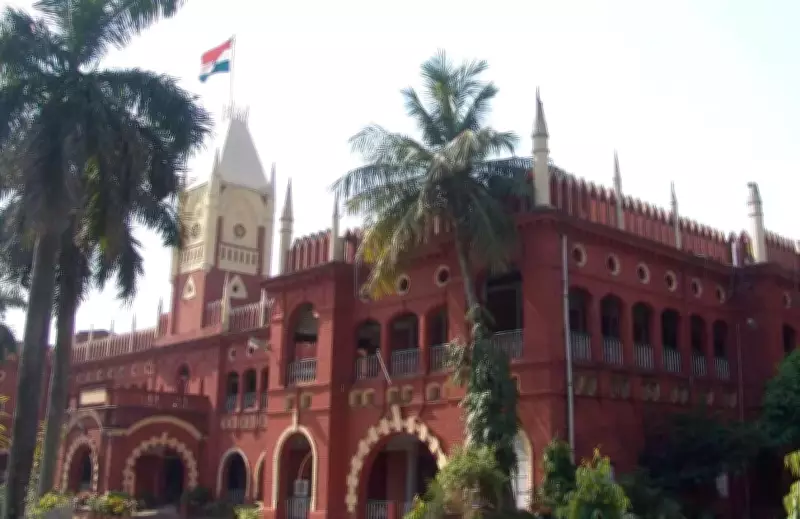
The Orissa High Court has issued a directive to the state government, compelling it to establish an alternative mechanism for water supply within a reasonable timeframe for Raipur village in Keonjhar district. This order comes in response to a public interest litigation (PIL) that highlighted the persistent water crisis faced by the villagers, despite pipelines being laid as early as 2020.
Background of the Case and Court's Observations
The PIL was filed by local resident Ashutosh Mohanta, who brought to the court's attention that although pipelines were installed to ensure water access in every household, not a single drop has flowed through them to date. Consequently, villagers have been forced to fetch water from government tube wells located far from their homes, causing significant hardship.
Hearing the matter, a division bench comprising Chief Justice Harish Tandon and Justice M S Raman noted that the government's initiative to lay pipelines in 2020 was commendable, but the continued absence of water supply through these pipelines remained both unexplained and unacceptable. The bench emphasized that such an obligation "cannot be undermined and not to be whittled down by any means."

Government's Response and Alternative Plan
Additional government advocate Debashis Tripathy submitted that the delay in water supply was due to litigations that stalled the construction of a water tank. This tank was essential for ensuring uninterrupted supply to areas under Udayapur and Khajirapat panchayats, under which Raipur village falls. He informed the court that the state has now explored an alternative solution by connecting Raipur village to the mega pipe water project, although this process would require additional time.
Recording this submission, the bench observed that since the government had taken a "conscious decision" to put an alternative mechanism in place, the grievance raised in the PIL stood redressed. The court also acknowledged that nine government tube wells had been installed in Raipur village as an interim arrangement to alleviate the water shortage.
Court's Directive and Constitutional Emphasis
The state government has sought six months to complete the alternative water supply project. In response, the bench stated, "We, therefore, expect that the government will complete the work within the aforementioned timeline," while disposing of the petition.
Furthermore, the High Court underscored the constitutional obligation of the state to provide safe drinking water. The bench observed, "It admits no quarrel that water is a source of life without which the sustenance of human life cannot be ensured." Stressing that access to drinking water is integral to the right to life, the court added, "It is engulfed into a fundamental right envisaged under Article 21 of the Constitution. The right to life imbibes within itself the right to have safe drinking water for the survival of the human race."
This ruling highlights the judiciary's role in ensuring that basic amenities like water are provided to citizens, reinforcing the state's duty under constitutional provisions.