Orissa High Court Declares Balasore Municipality Tender Clause Unconstitutional
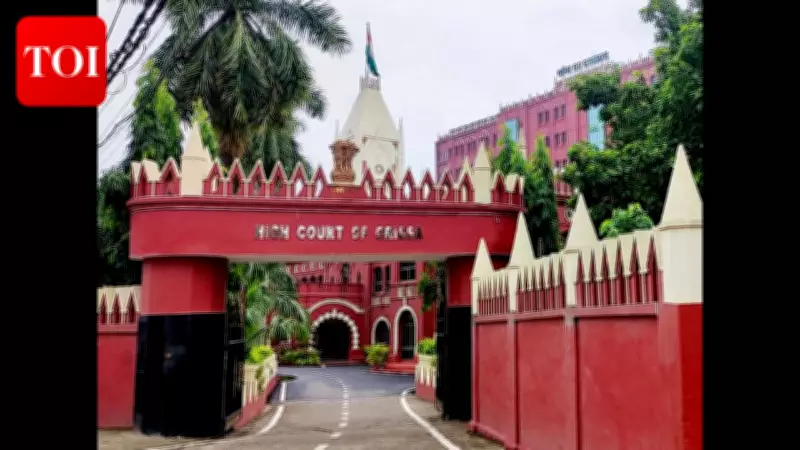
The Orissa High Court has delivered a landmark judgment by striking down a tender issued by Balasore Municipality, finding that a specific clause imposing a permanent ban on previously blacklisted bidders violates fundamental constitutional guarantees. The court emphasized that such a provision amounts to a "complete civil death" for affected parties, infringing on their rights under Article 19(1)(g) of the Constitution of India.
Court's Ruling on Perpetual Exclusion
A division bench comprising Chief Justice Harish Tandon and Justice M S Raman, in their ruling dated January 28, scrutinized Clause 15 of the tender document. This clause disqualified any service provider who had been "ever blacklisted or debarred" by any tender-inviting authority, government department, or public sector unit. The bench interpreted the word "ever" as applying "for all time to come," creating a lifelong prohibition that the court deemed excessive and unfair.
The court observed: "It is no longer 'res integra' (an untouched matter) that blacklisting or debarring a person from participating in a public tender has a larger ramification on the fundamental rights enshrined under Article 19(1)(g) of the Constitution of India." The bench further warned, "If the debarment or blacklisting is of perennial in nature, it invites a complete civil death."

Details of the Tender and Legal Proceedings
The tender in question was floated on April 9, 2025, for services including sanitisation, sweeping, and parking facilities around Balasore's daily markets, along with the collection of affordable tolls. The High Court's decision came after hearing three writ petitions together—one challenging the legality of issuing a fresh tender without canceling an earlier one, and another Public Interest Litigation (PIL) seeking directions for proper sanitation and parking management through a new tender.
The court noted that the authorities had already shown intent to provide the services, and to avoid repetition and ensure effective relief, the matters were consolidated. In quashing the tender, the High Court directed Balasore Municipality to float a fresh tender within 15 days, ensuring it aligns with constitutional principles of proportionality and fairness.
Implications for Fairness and Proportionality
The bench highlighted that the clause would exclude "even a bidder, who suffered an order of blacklisting for a day," which contradicts Supreme Court rulings on proportionality. This interpretation underscores the need for tender conditions to be reasonable and not impose undue hardships that permanently bar individuals or entities from participating in public procurements.
This ruling reinforces the judiciary's role in safeguarding constitutional rights against overly restrictive administrative actions, setting a precedent for future tender processes in India.