Orissa High Court Holds State Liable as 'Owner' of Hired Vehicles for Public Duty
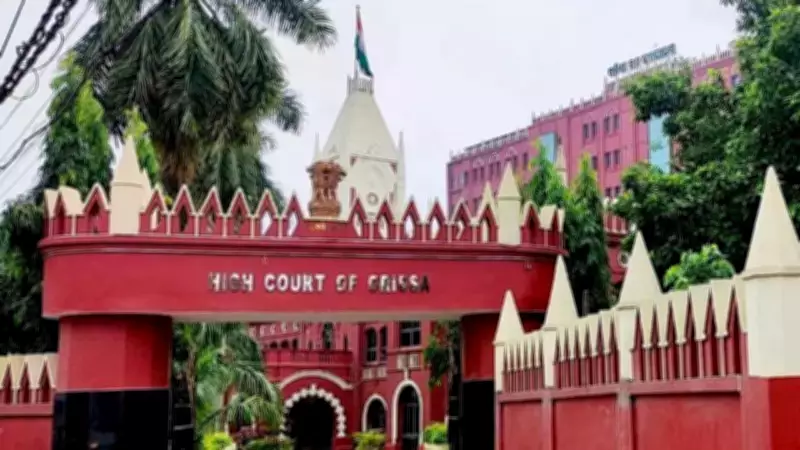
The Orissa High Court has delivered a significant ruling, stating that when a privately owned vehicle is hired and placed under the control of the government for public duty, the State can be treated as the "owner" for liability purposes under the Motor Vehicles Act, 1988. This decision came while dismissing an appeal filed by the Odisha government, with a single-judge bench of Justice Gourishankar Satapathy upholding a compensation award of ₹31.92 lakh granted to the family members of a truck owner who died in a road accident during relief operations following Cyclone Titli.
Background of the Case
On March 6, the high court issued a direction for the disbursal of the compensation to the four claimants within eight weeks. The State had challenged a March 24, 2023 order of the Motor Accident Claims Tribunal (MACT), Gajapati, which directed it to pay compensation to the four legal heirs of the deceased. The accident occurred in 2018 on NH-326A when the truck, in which the owner was travelling, was transporting relief blankets for cyclone-affected people.
In its appeal, the State argued that the truck belonged to the deceased himself and was insured with a private insurance company, and therefore, the government could not be held liable as the owner of the vehicle. However, the high court noted that the truck had been hired by the district administration and was under the government’s possession and operational control at the time of the accident.

Court's Observations and Ruling
Justice Satapathy observed, "The undisputed fact is that the Truck in question was under the rent of the District Administration at the relevant time of accident for performing relief work and, thereby, the Truck can be well considered to be under the requisition of the State of Odisha to perform public duty." The Judge emphasized that the key issue was not the registered ownership of the vehicle but who exercised effective control over it when the accident occurred.
He further stated, "It can never be disputed that the State of Odisha was in active control and possession of the Truck at the relevant time of accident and, therefore, following the definition of the owner as provided in Section 2(30) of the Act, the State of Odisha being in active possession of the Truck under a contract of rent is considered to be the owner of the Truck at the relevant time. But the deceased cannot be considered as an owner at the relevant time having parted with the control and possession of the Truck to the State of Odisha."
Implications of the Judgment
This ruling clarifies that for liability under the Motor Vehicles Act, 1988, the focus is on operational control rather than registered ownership. It sets a precedent that when the government hires private vehicles for public duties, it assumes responsibility as the "owner" in case of accidents, ensuring accountability and protection for affected parties. The decision reinforces the principle that public duty obligations extend to vehicles under government control, regardless of their private ownership status.