

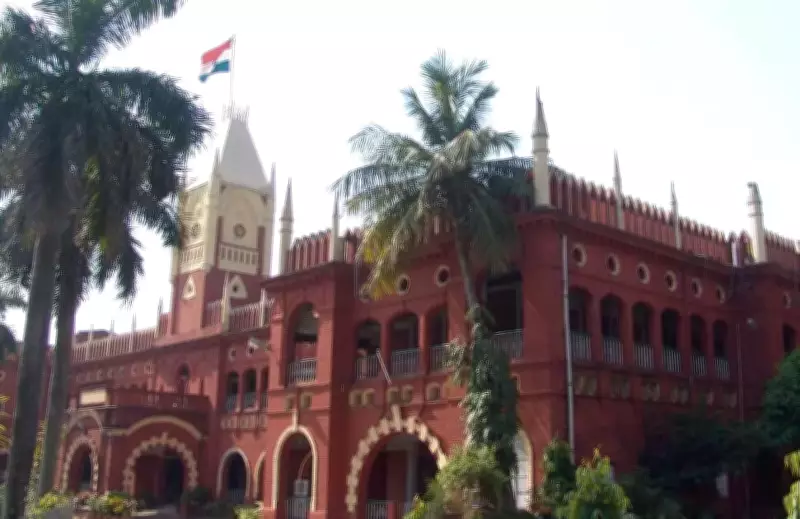
Orissa High Court Calls for National Policy on Bank Account Freezing in Criminal Cases
In a significant ruling, the Orissa High Court has urged the Ministry of Home Affairs (MHA) to develop a uniform national policy and standard operating procedure for freezing bank accounts during criminal investigations. The court highlighted the increasing instances where entire accounts are blocked, causing severe hardship to individuals and businesses.
Court's Observations on Balancing Investigative Powers and Rights
In a judgment dated February 13 and uploaded on March 5, a single-judge bench of Justice S K Panigrahi emphasized the need for a clear framework. This framework aims to balance the investigative powers of authorities with the rights of account holders, whose funds are often frozen without clarity on the alleged amounts involved in illegal transactions.
Justice Panigrahi stated, "In light of frequent filing of such matters concerning blanket freezing of the accounts, this court feels that the Ministry of Home Affairs, Government of India, should take proactive steps to address the same." He further recommended that the MHA consult all stakeholders, including states and union territories, to create consensus-based guidelines for handling such cases with consideration and compassion.

Case Background: LPG Distributor's Account Frozen
The court's observations arose from a petition filed by an authorized LPG distributor operating under Bharat Petroleum Corporation Limited in Gajapati district. The distributor challenged the freezing of its current account by a nationalized bank at its Paralakhemundi branch.
The bank had frozen the account on September 2, 2025, following an email from the cybercrime police station in Thiruvananthapuram related to a cyber fraud case. While acknowledging the police's authority under Section 106 of the Bharatiya Nagarik Suraksha Sanhita to freeze accounts, the court warned against blanket actions.
Court's Ruling on Proportionality and Specificity
Justice Panigrahi noted, "This court holds that the power of the police to freeze the account under Section 106 BNSS cannot be declared illegal per se. However, freezing the entire current account of a running LPG distributorship business, without identification or quantification of the alleged suspect amount, is disproportionate."
The court directed the cybercrime police to identify and communicate within two weeks the specific amount suspected to be linked to the offence. It also instructed the bank to place that amount on hold while allowing the distributor to operate the remaining balance for lawful business purposes.
The judge clarified that this order would not interfere with the ongoing investigation, stating, "The investigative interest can be adequately protected by marking the specific amount suspected to be connected with the offence."
Implications for Future Cases
This ruling underscores the need for a standardized approach to prevent undue financial distress during criminal probes. By advocating for a uniform policy, the Orissa High Court aims to ensure that law enforcement actions are both effective and fair, protecting the interests of businesses and individuals alike.






