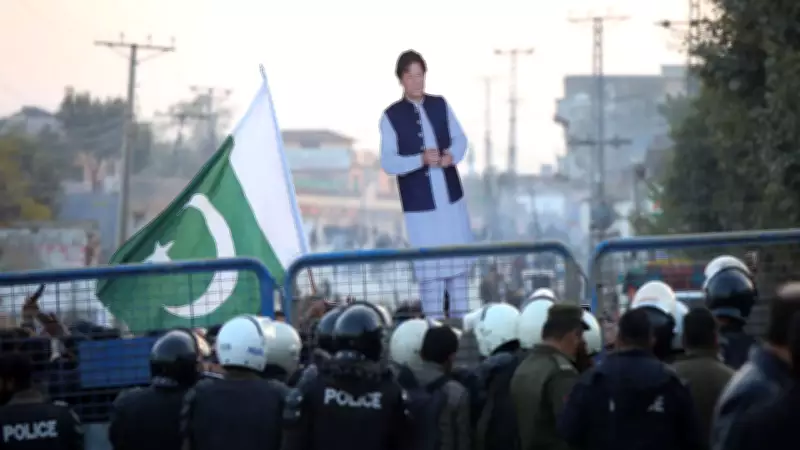
Pakistan's Government Escalates Legal Actions Against Imran Khan and Activists
The Pakistani government has significantly intensified its legal offensive against imprisoned former prime minister Imran Khan and prominent activists, with officials framing these measures as crucial for maintaining national security. As prison doors remain firmly closed to visitors and human rights lawyers face severe sentences extending up to a decade, numerous critics are raising alarms that the country's democratic space is rapidly diminishing under the growing shadow of military influence.
Government Defends Restrictions on Imran Khan
Authorities have implemented strict restrictions on Imran Khan, including the complete suspension of prison visits, asserting these actions were necessary after he allegedly violated jail regulations. Officials claim Khan engaged in prohibited political activities and disseminated what they describe as anti-state narratives. Both the government and military leadership have categorically denied allegations that these measures constitute illegal isolation or represent attempts to silence the former prime minister.
Interior Minister Talal Chaudhry has publicly rejected accusations of mistreatment, controversially labeling Khan as the most privileged prisoner in Pakistan. Chaudhry cited Khan's access to various facilities including gym equipment and a personal cook as evidence of proper treatment. The minister emphasized that all restrictions were implemented lawfully and in strict accordance with established prison regulations.
Military's Role in Political Decisions
The government has also dismissed persistent accusations that the military is driving political decisions in Pakistan. Talal Chaudhry stated unequivocally that the civilian government is taking decisions, adding that all institutions are working hand in glove. In comments quoted by BBC, Chaudhry praised the chief of defence forces for doing a marvellous job. Security sources have repeatedly insisted that the military operates strictly within constitutional and legal boundaries.
Military spokespersons have articulated concerns that certain political narratives present a growing threat to national security, particularly when convicted politicians allegedly use prison meetings to mobilize public opinion against state institutions. Officials maintain that such actions cross the boundary from legitimate political expression into matters of national defence.
Legal Basis for Actions Against Activists
Authorities stress that legal proceedings against politicians, activists, and lawyers are based on violations of existing laws, including the Prevention of Electronic Crimes Act (PECA), rather than representing efforts to suppress dissent. Interior Minister Chaudhry argued that attempts to frame law-breaking as democracy or human rights are entirely misplaced.
This same legal rationale underpinned the recent conviction of human rights lawyer Imaan Mazari and her husband, Hadi Ali Chattha. The couple received ten-year prison sentences after being found guilty of sharing what the state described as anti-state content on social media platforms.
Court Rulings and Government Justification
According to prosecutors and the court ruling, Mazari and Chattha's online activity involved disseminating and propagating narratives that align with hostile terrorist groups while undermining state institutions. Information Minister Attaullah Tarar defended the verdict, posting on social media platform X that it reflected proper application of the law with the statement: As you sow, so you shall reap!
The government maintains these measures are necessary to prevent destabilization and ensure accountability, regardless of an individual's political profile or public standing. Officials argue that legal actions are taken purely based on evidence of law violations rather than political considerations.
Critics Warn of Shrinking Democratic Space
Critics counter that the cases of Imran Khan and Imaan Mazari demonstrate that multiple voices are being systematically silenced in Pakistan. They warn that space for dissent continues to narrow significantly as military influence looms increasingly large over civilian life and political processes. Human rights organizations and democratic watchdogs have expressed particular concern about the application of cybercrime laws against political opponents and activists.
The ongoing legal offensive has sparked debates about the balance between national security concerns and protection of fundamental democratic rights in Pakistan. While government officials present their actions as necessary legal measures, critics view them as part of a broader pattern of shrinking civil liberties and increasing institutional control over political discourse.