

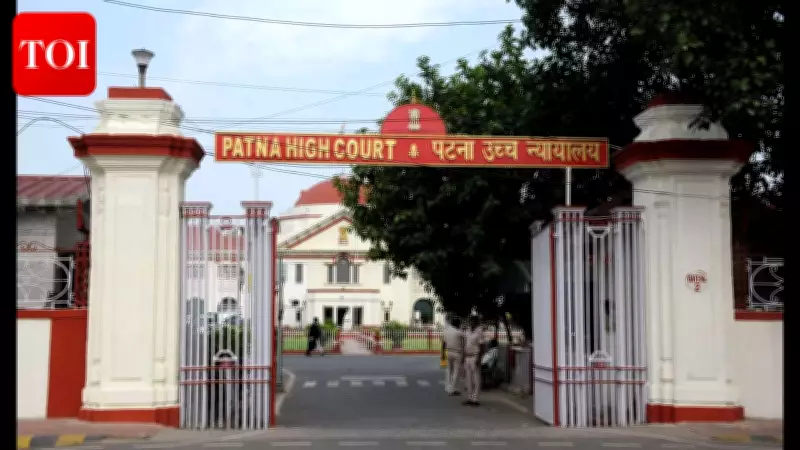
Patna High Court Mandates Bihar Government to Establish Streamlined Traffic Fine Settlement System
The Patna High Court has issued a directive to the Bihar state government, compelling it to enact a notification that will facilitate a more efficient and economically accessible process for resolving road traffic fines and offences across the state. This initiative aims to create a "pocket friendly" mechanism, potentially reducing financial burdens on violators while ensuring compliance with traffic laws.
Legal Framework and Court Order Details
Under the proposed system, authorities would be empowered to settle traffic offences in bulk by significantly lowering the amount of fines imposed. This legal provision is grounded in Section 200 of the Motor Vehicles Act, 1988, which grants state governments the authority to issue such notifications. The order was delivered by a division bench comprising Chief Justice Sangam Kumar Sahoo and Justice Alok Kumar Sinha during a hearing on a public interest litigation filed by Rani Tiwari.
The court has instructed the state government to take immediate steps to issue the necessary notification. Originally passed on March 11, the order became publicly available on Friday after being uploaded to the high court's official website, highlighting the urgency and transparency of the judicial process.

Existing Models and Current Status in Bihar
During the proceedings, the petitioner's counsel, Vikas Kumar Pankaj, informed the court that several other Indian states, including Gujarat, Odisha, and Delhi, have already implemented similar mechanisms for bulk settlement of traffic fines. In these regions, traffic challans are often resolved by reducing penalties to as low as one-fourth of the original amount, thereby encouraging quicker resolution and reducing backlog in courts.
In contrast, no such system is currently operational in Bihar, leading to delays and higher costs for offenders. This disparity prompted the court's intervention to align Bihar with more progressive states in managing traffic violations.
Integration with National Lok Adalat and Future Steps
As part of the interim measures, the member secretary of the Bihar State Legal Services Authority (BSLSA) reported to the court that efforts are underway to include pending road traffic challan cases in the upcoming National Lok Adalat, scheduled for Saturday, March 14. This event will be held across district courts in Bihar as well as at the Patna High Court, providing an immediate platform for dispute resolution.
The judges have directed the BSLSA member secretary to collaborate closely with the state's transport department to enhance public awareness about the availability of traffic fine settlements through these Lok Adalats. This coordination aims to ensure that citizens are well-informed and can take advantage of the reduced penalty options promptly.
Next Hearing and Broader Implications
The matter is set to be reviewed again on April 20, where further progress and implementation details will be assessed. This ongoing judicial oversight underscores the court's commitment to reforming traffic fine management in Bihar, potentially setting a precedent for other states to adopt similar cost-effective and efficient systems.
By leveraging existing legal frameworks and learning from successful models in other states, this initiative could significantly alleviate the administrative burden on courts while making justice more accessible to the public. The move reflects a broader trend towards simplifying legal processes and promoting public welfare in governance.






