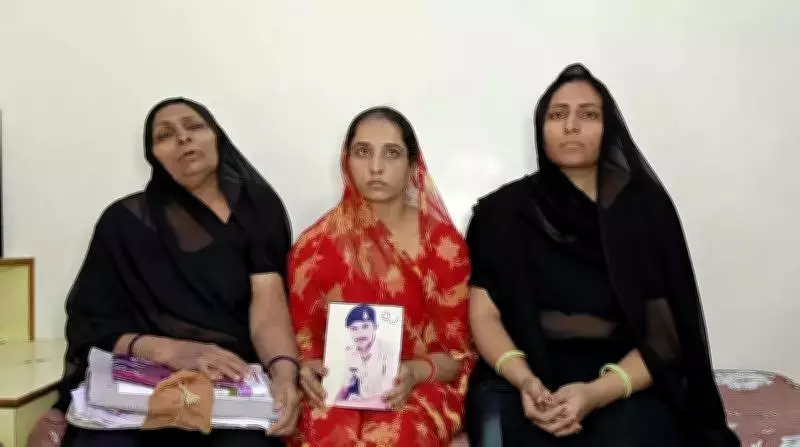
In a tragic development from Gujarat, a police sub-inspector has been formally booked for abetment of suicide, following the death of a head constable in Rajkot. This incident comes just a week after a similar case in Bhavnagar, highlighting concerns over workplace harassment within the police force.
Details of the Tragic Incident
On January 21, Head Constable Digvijaysinh Gohil, who was posted at the Ghogha police station, consumed poison at his residence. Despite being rushed to a private hospital for emergency treatment, he succumbed to his injuries the following day, on January 22. Gohil had dedicated 12 years of service to the Gujarat police and had been stationed in Ghogha for the past four years, making his untimely death a significant loss to the department.
Father's Allegations of Harassment
The case took a serious turn when Jaydevisinh Gohil, the deceased's 66-year-old father and a retired sub-inspector himself, filed a formal complaint. He accused Police Sub-Inspector B K Goswami of subjecting his son to persistent mental harassment, which he believes drove Digvijaysinh to take the extreme step of suicide.
According to the complaint, the harassment began after Digvijaysinh declined to take up investigations into two specific cases: a temple theft in Kaliyak and an assault incident in the Gundia Keriya area. Following this refusal, PSI Goswami allegedly initiated a campaign of intimidation against the head constable.
Pattern of Alleged Threats and Demands
The complaint outlines a disturbing pattern of behavior by the accused officer. It is alleged that Goswami threatened to ruin Digvijaysinh's service record, end his career prematurely, and have him transferred out of the district. These threats created an environment of fear and pressure for the constable.
Furthermore, despite Digvijaysinh being on officially sanctioned sick leave from November 25, 2025, to January 7, Goswami repeatedly demanded his whereabouts and live location. He issued notices directing the constable to report for duty and threatened him with suspension, ignoring his medical condition.
In a particularly distressing instance, when Digvijaysinh's daughter was hospitalized from October 2 to October 4, 2025, and he was unable to attend duty, Goswami allegedly demanded his live location and insisted on meeting outside the hospital. This intrusion into personal family matters added to the constable's mental anguish.
Final Moments and Legal Action
On the fateful day of January 21, Digvijaysinh reported to the police station for duty as required. Later, he made a heartbreaking call to his sister, Dakshaba, revealing that he had consumed poison due to the unbearable mental torture inflicted by PSI Goswami. This confession has become a crucial piece of evidence in the ongoing investigation.
In response to the father's complaint, the police have registered a case under Section 108 of the Bharatiya Nyaya Sanhita (BNS), which pertains to abetment of suicide. This legal step underscores the seriousness of the allegations and marks the beginning of a formal inquiry into the circumstances leading to the constable's death.
Broader Implications and Context
This incident raises important questions about workplace culture and mental health support within police departments. The fact that it follows another suicide by a head constable in Bhavnagar just a week prior suggests a need for systemic review and intervention.
The case also highlights the challenges faced by lower-ranking officers when dealing with superiors, potentially indicating a power dynamic that can lead to abuse. As the investigation proceeds, it will be crucial to examine whether proper protocols were followed and if there were any missed opportunities to address the harassment allegations earlier.
Authorities are now tasked with ensuring a thorough and transparent investigation to deliver justice for Digvijaysinh Gohil and his grieving family. The outcome of this case may set a precedent for how similar incidents are handled in the future, potentially leading to reforms in police administration and mental health policies.