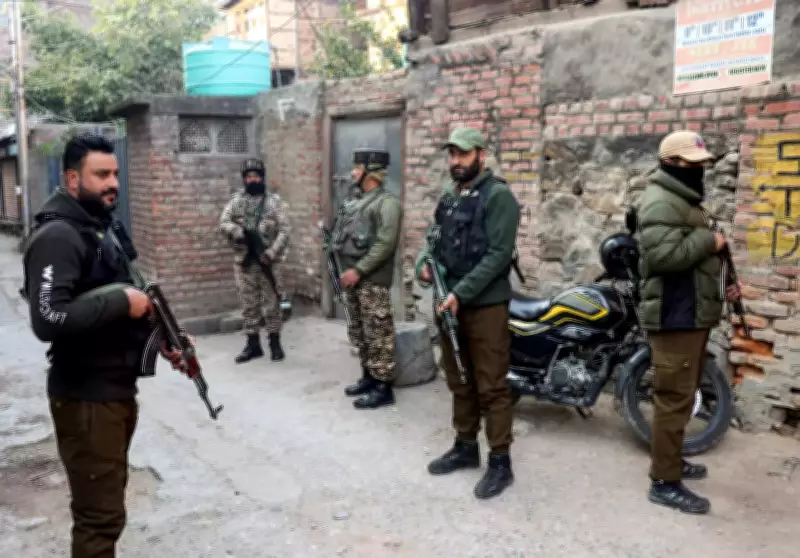
Srinagar Police Dismantle Extensive Lashkar e Taiba Network Across Multiple States
In a significant breakthrough, Srinagar police have successfully busted a sophisticated, multi-state network of Lashkar e Taiba, reminiscent of the Al-Falah type operations. This operation culminated after a meticulous, month-long investigation initiated following the arrest of two Pakistani terrorists in March. The arrested individuals were allegedly involved in receiving, guiding, and arranging logistics for foreign terrorists infiltrated into Jammu and Kashmir, unveiling a complex web of overground workers not only in Kashmir but also extending to states like Haryana and Rajasthan.
Key Arrests and Interrogation Insights
The investigation led to the apprehension of two high-profile terrorists: Abdullah, also known as Abu Hurrera or Ahmed, a resident of Kasur in Pakistan's Punjab who infiltrated via Gurez in 2010, and Mohd Usman, alias Khubaib, from Lahore, who crossed over to Baramulla in 2017. Based on human and technical intelligence, they were captured from Malerkotla, Punjab, a month ago. Their interrogation revealed that Hurrera had established a network of overground workers in south Kashmir over the past 16 years, while Usman had built a similar network in Baramulla since 2017. Both terrorists, classified as A-plus category, have reportedly handled and commanded around 40 foreign terrorists in Jammu and Kashmir over the years and have been collaborating since 2023.
Expansion of the Network Beyond Jammu and Kashmir
The probe uncovered that this network was being expanded to include towns in Haryana and Rajasthan, particularly those with a large concentration of seminaries suspected of having connections to Pakistan and Lashkar e Taiba. Hurrera and Usman had traveled to Nuh and Mewat via Delhi at different times to facilitate this expansion. Searches conducted across 19 locations in Jammu and Kashmir, Rajasthan, and Haryana have resulted in the detention or arrest of six overground workers in Haryana, four in Rajasthan, and over a dozen in Jammu and Kashmir.

Objectives and Implications of the Multi-State Module
Sources indicate that the primary purpose of this multi-state module was to create a Lashkar e Taiba network outside of Jammu and Kashmir, leveraging Pakistani and LeT contacts. This network aimed to set up hideouts for LeT terrorists and eventually facilitate their exit from India using forged documents arranged by the local overground worker network. Notably, at least one Pakistani terrorist, known as Khargosh, is believed to have escaped from Rajasthan using forged identity and travel documents. The investigation also shed light on the funding and financial patterns of Lashkar e Taiba, providing crucial insights into their operations.
Ongoing Investigation and Future Steps
More arrests are anticipated in the coming days as investigators continue to explore potential footprints in additional states. The case is likely to be taken over by the National Investigation Agency for further scrutiny and prosecution. This operation marks a significant step in counter-terrorism efforts, highlighting the persistent threats and the need for coordinated security measures across state borders.