

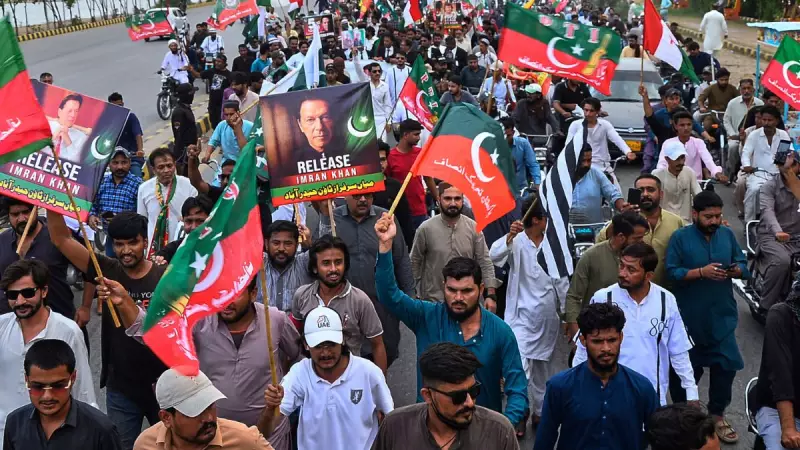
The political temperature in Pakistan has soared once again as the Pakistan Tehreek-e-Insaf (PTI) party announced plans for nationwide protests. The core demand is immediate and unrestricted access to their imprisoned founder and former prime minister, Imran Khan. This move comes amidst growing concerns and unverified claims circulating about his health and well-being in custody.
Protests Planned Amidst Access and Health Concerns
The PTI has called for demonstrations across the country, urging its supporters to take to the streets. The party's central grievance is the alleged lack of proper access to Imran Khan, who is currently held at Adiala Jail in Rawalpindi. Senior PTI leader, Barrister Gohar Ali Khan, has been vocal in highlighting this issue. He stated that the party's legal team and family members have faced significant hurdles in meeting the former premier.
Compounding the situation are serious but unconfirmed claims regarding Imran Khan's health. While specific details of these claims were not officially verified in the source report, they have fueled anxiety among PTI supporters and form a key part of the protest rationale. The party leadership insists that transparent and regular access is essential to dispel rumors and ensure his rights are upheld.

Preemptive Security Measures in Rawalpindi
Anticipating potential unrest, the local administration in Rawalpindi has taken stringent preemptive measures. The district magistrate has imposed Section 144 of the Criminal Procedure Code (CrPC) in the entire Rawalpindi district. This order effectively bans all public gatherings, protests, and processions of any kind.
The imposition of Section 144 is a clear attempt by authorities to maintain public order and prevent any large-scale assembly that could lead to a law-and-order situation. This legal provision is often used in Pakistan and India to restrict movement and assembly when there is a perceived threat of disturbance. The specific focus on Rawalpindi is strategic, given that Adiala Jail, where Imran Khan is incarcerated, is located within this district.
A Nation on Edge: Political and Legal Standoff
This development marks another chapter in the prolonged political and legal confrontation between Imran Khan's PTI and the current establishment. Since his ouster from power, Khan has faced a multitude of legal cases, resulting in his imprisonment. The PTI has consistently framed these cases as politically motivated.
The call for protests and the subsequent imposition of Section 144 set the stage for a potential standoff. It raises critical questions about political expression, the right to protest, and the treatment of high-profile prisoners in Pakistan. The situation remains fluid, with the potential for escalation depending on the PTI's next steps and the government's response to their demands for access.
The eyes of the nation are now on Rawalpindi and other major cities, waiting to see if the protest calls will materialize on the ground and how security forces will enforce the restrictive orders. The outcome could have significant implications for Pakistan's already volatile political landscape.






