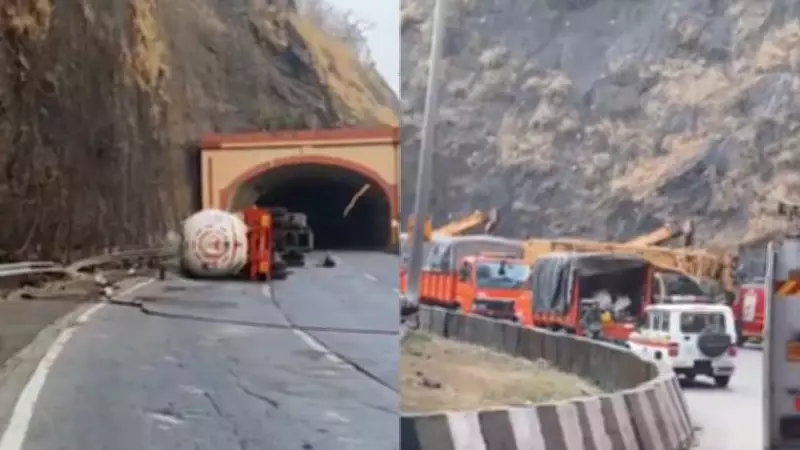
The overturning of a propylene tanker on the busy Pune-Mumbai Expressway late Tuesday night, which caused severe traffic disruptions lasting until early Thursday, has starkly revealed significant deficiencies in Maharashtra's emergency response capabilities for hazardous material incidents, according to disaster management specialists.
Critical Hazards of Propylene Leaks Demand Specialized Response
Propylene, a highly flammable hydrocarbon gas extensively utilized in petrochemical and plastic manufacturing industries, poses extraordinary and severe operational challenges when a tanker transporting it overturns. Unlike conventional fuel spills that can frequently be managed using standard firefighting procedures, a propylene leak can rapidly escalate into a catastrophic explosion, rendering rescue, containment, and recovery operations exceptionally complex and dangerous.
Experts emphasize that the most pressing challenge during such emergencies is the absence of specialized hazardous materials (HazMat) response teams that are properly trained and equipped to handle pressurized gas tankers. Propylene is transported in a liquefied state under high pressure, and when a tanker topples, even a minor fracture in the valve or tank shell can initiate a swift and uncontrolled release of the volatile gas.

Experts Call for Immediate Government Action and Dedicated Units
Major General P K Shrivastava (retired), a chemical, biological, radiological and nuclear (CBRN) expert, stated that this incident should serve as a crucial wake-up call for the state government. "Maharashtra urgently requires dedicated HazMat units stationed along major highways like the Pune-Mumbai Expressway to ensure a rapid and professional response to chemical transport accidents," he informed TOI.
Bhalchandra Chavan, director of the state disaster management department, openly acknowledged that they currently lack the technical expertise necessary to manage such hazardous material emergencies effectively. "We recognize that we do not possess the specialized capability to operate and control such incidents. We will examine this matter seriously and implement necessary corrective measures in the coming days. Our personnel will also undergo training in coordination with other specialized agencies," Chavan told TOI.
Essential Recommendations for Enhanced Safety and Preparedness
Shrivastava underscored the critical need for:
- Regular drills and simulations involving chemical tankers to improve readiness.
- Enhanced coordination between transport companies and emergency services.
- Specialized training programs for local fire brigade personnel who are typically the first responders.
"Local fire teams are often the first to arrive at the scene, but without appropriate training and equipment, their mission becomes exceedingly hazardous," he cautioned.
The prolonged traffic disruption and potential risk of a major disaster have highlighted an urgent need for systemic improvements in Maharashtra's approach to hazardous material transportation safety and emergency response protocols.