

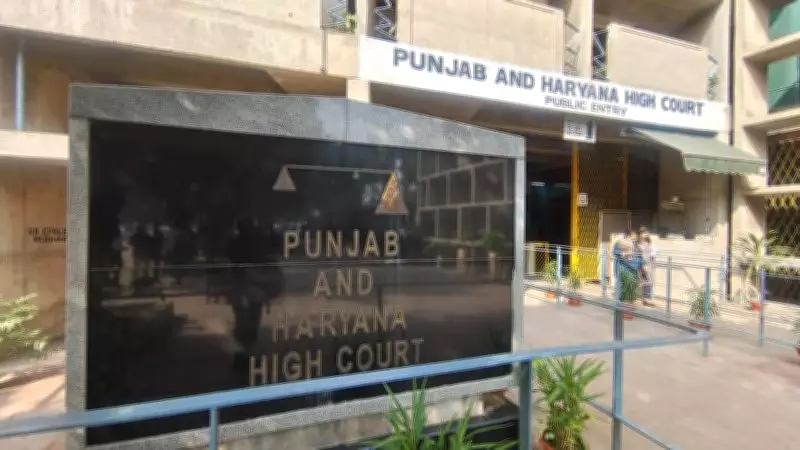
In a significant ruling, the Punjab and Haryana High Court has refused to condone a 546-day delay by the Government of Punjab in filing an appeal against a judgment that granted a revised pay scale to Psychiatrist Social Workers. The court held that administrative lethargy cannot be treated as a valid explanation for missing legal deadlines.
Background of the Case
The dispute arose from a Single Judge's decision concerning the pay scale applicable to Psychiatrist Social Workers. The employees argued that although the advertisement initially reflected a grade pay of Rs 3,800, the pay structure governing the post was revised to Rs 4,200. The Single Judge accepted this contention, noting that other employees holding the same post were already receiving the higher grade pay. The state sought to challenge this decision through a Letters Patent Appeal but approached the court after a delay of 546 days.
State's Explanation for Delay
Seeking condonation of the delay, Punjab contended that the matter required movement through various departments for opinions, approvals, and preparation of the appeal. The state argued that financial implications would arise if the appeal was not entertained. The explanation essentially pointed to bureaucratic processing and inter-departmental correspondence.

Court's Reasoning
The Division Bench of Justice Jasgurpreet Singh Puri and Justice Amarjot Bhatti found that the delay occurred on account of procedural communication between different departments. The court observed that such reasons do not constitute "sufficient cause" under Section 5 of the Limitation Act. The Bench stated, "It is settled law that mere inter-departmental communication cannot be termed to be sufficient cause within the ambit of Section 5 of Limitation Act especially when the appellant is the State authority or its instrumentality because no special treatment can be given to them and rather larger responsibility is imposed."
The court also rejected the argument regarding financial implications, noting that the Single Judge had rightly found that the revised pay scale was already in force when the employees were appointed. The Bench emphasized that once the pay scale of the post underwent a change, the respondents were under an obligation to grant the revised pay scale.
Legal Principles Reinforced
The judgment reinforces three important principles: first, administrative red tape is not a legal justification for extraordinary delay; second, government departments must organize their internal functioning to comply with statutory timelines; third, public authorities cannot expect courts to routinely overlook delays due to files remaining under process.
The Bench relied on the Supreme Court judgment in Shivamma (Dead) through LRs versus Karnataka Housing Board and others, which emphasized that government authorities cannot seek indulgence merely because files move through official channels and that administrative lethargy can never be treated as a valid explanation for delay.
Impact of the Ruling
The court noted that the magnitude of the delay weighed heavily in its decision. The judges observed that a minor delay might have been considered differently, but an inordinate delay of 546 days due to procedural grounds cannot constitute sufficient cause. With the delay application dismissed, the state's Letters Patent Appeal cannot proceed on merits, leaving the Single Judge's ruling undisturbed.
The larger message from the ruling is that courts are increasingly unwilling to grant routine condonation of delay to government departments. Limitation laws are intended to bring certainty and discipline to litigation, and government agencies must adapt their internal systems to meet statutory deadlines rather than expect legal timelines to bend around bureaucratic procedures.






