Punjab Police File Case Against Wheat Godown Owner for Obstructing Government Inspection
Police in Jalandhar have registered a formal case against the owner of a wheat storage facility following a complaint from the district food and civil supplies department. The complaint centers on allegations of obstruction in accessing Punjab government central pool wheat stocks.
Details of the Alleged Obstruction
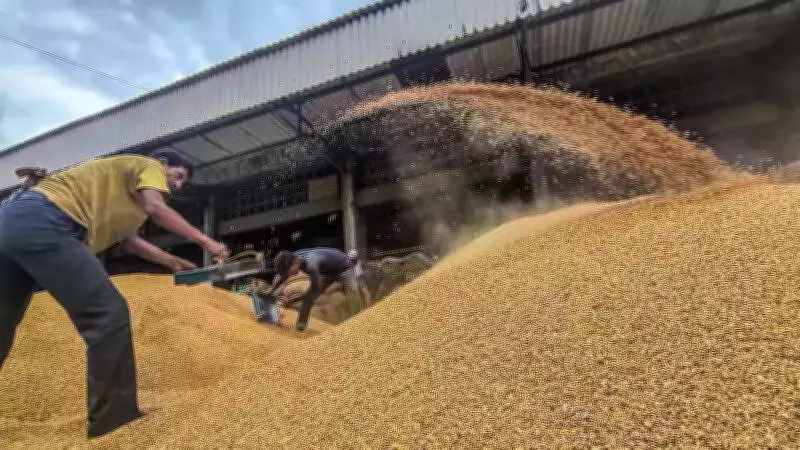
The case involves approximately 49,672 jute bags of wheat, equivalent to roughly 24,836 quintals, stored at the godown. According to official statements, on February 17, food and supply officer Manish Kumar and his team were denied entry to inspect the premises. The owner, identified as Upkar Singh Hothi of JS Farm in Sarmastpur, allegedly refused access and also removed security personnel who had been deployed to safeguard the government wheat.
This action has raised serious concerns regarding the safety and integrity of the wheat stocks, as well as potential disruptions to planned lifting operations. The police emphasized that the obstruction created significant risks for the government property.

Legal Proceedings and Political Context
After obtaining legal opinion, an FIR was registered on February 27 at the Maqsudan police station. The case has been filed under sections 316(2), 314, 221, and 351(2) of the Bharatiya Nyaya Sanhita (BNS). Jalandhar police have confirmed that raids are being conducted to apprehend the accused at the earliest opportunity.
The case gained additional attention on Sunday evening when Congress MLA Sukhpal Singh Khaira posted photographs showing Hothi with Aam Aadmi Party (AAP) supremo Arvind Kejriwal and Punjab Chief Minister Bhagwant Mann. This political connection has added a layer of scrutiny to the ongoing investigation, though police statements have focused solely on the legal aspects of the obstruction complaint.
Ongoing Investigation and Implications
Authorities are treating the matter with urgency due to the substantial quantity of government wheat involved and the potential for mismanagement or pilferage. The removal of security personnel is particularly concerning, as it could compromise the chain of custody for the stocks.
The district food and civil supplies department's complaint highlights the critical need for unimpeded access to government storage facilities to ensure transparency and accountability in public resource management. This case underscores the broader challenges in monitoring and securing agricultural commodities under state control.
As the investigation progresses, police are coordinating with relevant departments to assess the full extent of any irregularities and to ensure the secure handling of the wheat stocks. The outcome of this case may have implications for storage and inspection protocols across Punjab's agricultural supply chain.