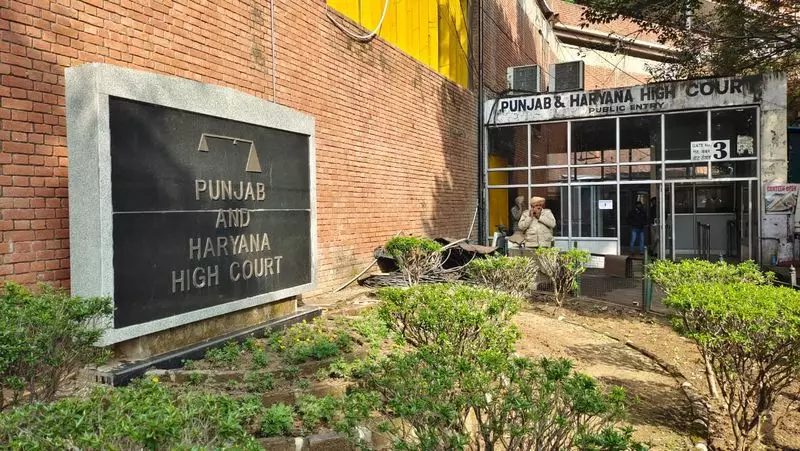
In a significant legal development, the Punjab and Haryana High Court has granted default bail to an accused in the 2017 Rajasansi airport blast case, citing a crucial delay in the completion of the investigation. The ruling comes after the accused spent nearly seven years in judicial custody, awaiting trial.
The Long Road to Bail: A Timeline of Delays
The case dates back to September 2017, when a low-intensity explosion occurred near the cargo complex of the Sri Guru Ram Dass Jee International Airport in Rajasansi, Amritsar. The National Investigation Agency (NIA) took over the probe, arresting Gurwinder Singh from Mohali in October of the same year. He was subsequently charged under various sections of the Unlawful Activities (Prevention) Act (UAPA) and the Explosive Substances Act.
The core of the High Court's decision lies in the timeline of the investigation. The law mandates that a chargesheet must be filed within 90 days from the first remand when the accused is booked under the UAPA. However, in this instance, the NIA filed its first chargesheet on January 19, 2018, which was beyond the stipulated 90-day period. The prosecution argued that a supplementary chargesheet was later filed, but the court focused on the initial delay.
Court's Rationale: Upholding the Right to Speedy Trial
Justice Vikas Bahl, presiding over the case, emphasized the fundamental legal principle behind the default bail provision. The bench observed that the right to seek default bail becomes absolute once the investigation agency fails to file its report within the statutory timeframe. This right cannot be extinguished by the subsequent filing of a chargesheet or a supplementary report.
The court clarified that the term “investigation” includes proceedings up to the filing of the first police report under Section 173 of the CrPC. Since the NIA did not complete this stage within 90 days of Gurwinder Singh's arrest, his indefeasible right to default bail was established. The judge noted that the accused had formally applied for this bail back in January 2018, soon after the delayed chargesheet was filed, but his plea was not decided upon for years.
Implications and the Way Forward
This ruling underscores the judiciary's role in enforcing procedural safeguards meant to prevent indefinite detention without trial. While the bail has been granted, it is crucial to note that the trial in the blast case will continue. The default bail is a relief based on procedural lapse, not an acquittal on the merits of the allegations.
The decision places a spotlight on the efficiency and timelines of investigations conducted by premier agencies. It serves as a reminder that stringent laws like the UAPA must be implemented with equal rigor for procedural compliance to protect the rights of the accused. The case will now proceed in the trial court, with Gurwinder Singh on bail, marking a new chapter in a legal battle that has stretched for nearly seven years.