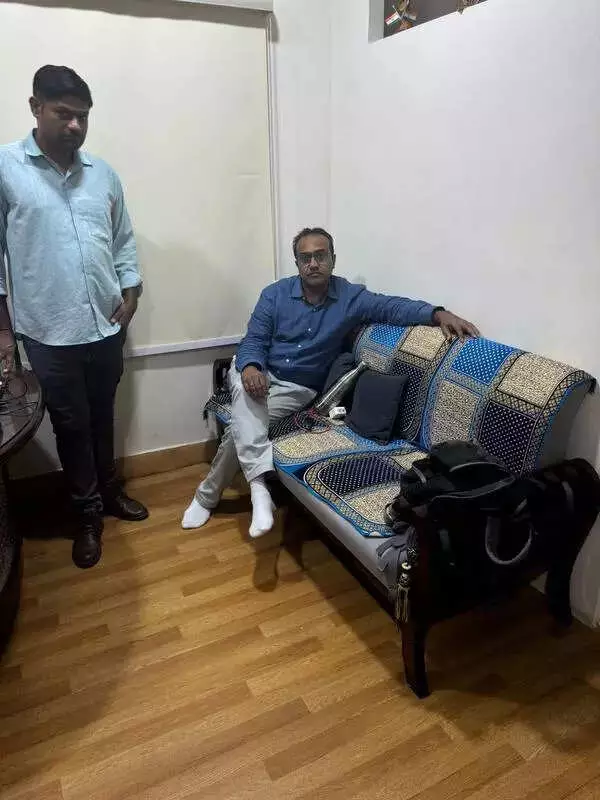
In a significant development in a high-profile corruption case, the Rajasthan High Court on Monday granted bail to Dr Manish Agrawal, the former head of the neurosurgery department at Jaipur's prestigious Sawai Man Singh (SMS) Hospital, and his alleged associate Jagat Singh. The bail comes nearly two months after their arrest by the state's Anti-Corruption Bureau (ACB).
The Arrest and Allegations
The Anti-Corruption Bureau took Dr Agrawal and Jagat Singh into custody on October 9. The arrests were made in connection with allegations that they demanded and accepted a bribe of Rs 1 lakh. The money was allegedly for approving bills related to the procurement of specialized brain coils for the government-run hospital. The case had attracted considerable public and media attention, primarily due to the senior position held by Dr Agrawal as the Head of Department.
Defense Arguments in Court
During the bail hearing, Advocate Deepak Chauhan, representing Dr Agrawal, presented several key arguments to the court. He contended that there was a lack of direct evidence showing a bribe demand, which is a crucial requirement under the Prevention of Corruption Act. Chauhan emphasized that the complainant had never met Dr Agrawal before approaching the ACB with the allegations.

Furthermore, the defense counsel pointed out a critical detail: no bribe money was recovered from Dr Agrawal's possession. The cash was allegedly found in an open area nearby. Chauhan also argued that the processes for tender and bill clearance at SMS Hospital are managed by a committee system. He stressed that there were no pending matters related to the complainant that required Dr Agrawal's sole approval, challenging the motive behind the alleged demand.
Court's Observations and Bail Order
The single bench of Justice Anil Kumar Upman, while granting bail, noted that while a chargesheet has been filed in the case, the necessary prosecution sanction from the state government is still pending. This procedural aspect was a key consideration. The court also took into account the time the accused had already spent in judicial custody since their arrest in October.
The grant of bail allows the two accused to be released from jail, though the legal proceedings against them will continue. The case highlights the ongoing scrutiny of alleged corruption in public healthcare procurement and the legal complexities involved in proving charges under anti-corruption laws.